
Know when a casino payout is actually available
 Available in US
Withdrawal timing depends on casino approval, payment processing, account checks and the conditions attached to a bonus or deposit.
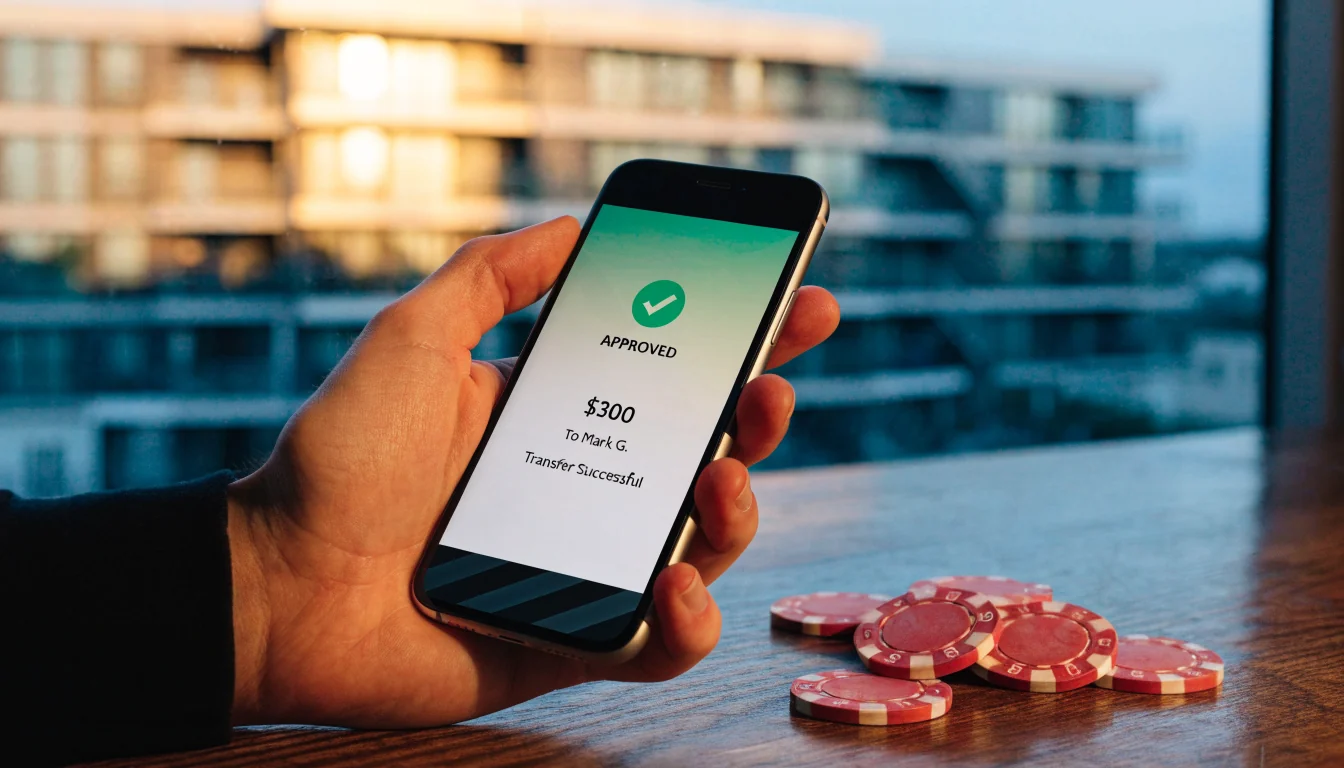
What “Instant” Means in Casino Withdrawals
“Instant” can describe the casino’s decision to approve a withdrawal, not the moment the money becomes available in an account. These are separate stages. A request may be reviewed and released by the operator quickly, while the transfer still has to pass through the chosen payout channel. The phrase “instant withdrawal” is therefore incomplete unless it is clear which stage is being described.
The interval between submitting a request and the casino beginning to process it is known as the pending period. A specialist review of New Zealand-facing casinos reports that this period ranges from no wait to 72 hours, depending on the site. The figure should be treated as a reported range, not a fixed timetable applying across the market. A casino with no pending period can begin processing a request immediately; that alone does not establish when the funds will be spendable.
Some specialist reviews report that the fastest sites approve withdrawals on the same day, and that automatic processing is available for verified accounts at some operators. These descriptions concern the casino’s handling of a request. They do not mean every withdrawal is approved immediately, nor do they establish that funds reach the account on the same day. An advertised “instant” casino withdrawal may thus refer to a fast internal decision rather than an end-to-end payout.
Instant withdrawals can depend on more than a casino’s headline claims. This list gives you a concise reference to the available licensing and payout-speed information for operators featured on this page.
-
7Bit Casino
- License
- Tobique Gaming Commission, licence no. 0000091
7Bit Casino is listed with a Tobique Gaming Commission licence, number 0000091.
-
Ricky Casino
- License
- Tobique Gaming Commission, licence no. 0000002
Ricky Casino is listed with a Tobique Gaming Commission licence, number 0000002.
-
N1 Casino
- License
- Malta Gaming Authority, licence no. MGA/B2C/394/2017
N1 Casino is listed with a Malta Gaming Authority licence, number MGA/B2C/394/2017.
-
BitStarz
- License
- Curaçao Gaming Authority, licence no. OGL/2024/165/0185
BitStarz is listed with a Curaçao Gaming Authority licence, number OGL/2024/165/0185.
-
Play Grand
- License
- Malta Gaming Authority, licence no. MGA/B2C/370/2017
Play Grand is listed with a Malta Gaming Authority licence, number MGA/B2C/370/2017.
-
Wintino
- Payout speed
- 1-3 business days
The stated payout speed for Wintino is 1–3 business days.
-
Zotabet
- License
- 07017519840
- Payout speed
- 1-3 business days
Zotabet has the listed licence number 07017519840 and a stated payout speed of 1–3 business days.
-
Lamabet
- Payout speed
- 1-3 business days
The stated payout speed for Lamabet is 1–3 business days.
-
Neospin
- License
- Tobique Gaming Commission, licence no. 0000064
Neospin is listed with a Tobique Gaming Commission licence, number 0000064.
The practical distinction is between approval and delivery. Before approval, the request may be awaiting the operator’s processing. After approval, the transfer is in the hands of the payout channel and its handling arrangements. For a player assessing an instant withdrawal casino, the relevant question is not simply whether the site uses the word “instant”, but whether it specifies when processing begins and what that estimate covers. A claim about approval should not be read as a promise about receipt.
Withdrawal limits are a separate part of the same assessment. They determine how much may be requested or paid out in a given transaction or period; they do not determine how quickly a request is handled. Specialist casino reviews describe minimum withdrawal thresholds commonly falling between NZ$20 and NZ$50, while some sites accept cash-outs from NZ$10. These are reported figures, not universal requirements, so the applicable minimum depends on the operator’s terms.
The same reviews report daily caps of NZ$4,000 to NZ$10,000, with weekly ceilings often set as a multiple of the daily allowance. For a single transaction, reported limits for e-wallet and card withdrawals range from NZ$5,000 to NZ$10,000. A high-value withdrawal may therefore be constrained by the transaction cap even when the account balance is larger. A daily cap and a per-transaction limit are not interchangeable: both may affect how a payout is arranged.

These figures should be read as descriptions found in specialist reviews, rather than as guarantees for every New Zealand-facing casino. The operator’s terms are the relevant place to confirm the minimum, the transaction ceiling and any daily or weekly cap. A page that says “instant” without explaining its processing stage or limits leaves important parts of the payout arrangement unspecified.
In short, “instant” is best understood as a claim about one part of withdrawal processing, not a complete measure of how soon money can be used. The pending period, the casino’s approval and the delivery of funds are distinct points in the process. Keeping them separate makes comparisons more meaningful without treating a rapid approval as proof of an equally rapid arrival.
How Long Different Payout Methods Take
The time to receive a withdrawal depends partly on the route used to send it. For verified accounts, e-wallet withdrawals are described as taking 24 to 48 hours from the withdrawal request until the money is available to spend. Bank transfers and card refunds take longer: delivery to a New Zealand account may require three to seven business days. These are different channels, so “instant withdrawal” does not describe a single, consistent arrival time.
E-wallets
E-wallets are the faster option among the fiat methods covered here. The stated 24-to-48-hour period runs from the request through to spendable funds, and applies to verified accounts. It therefore describes more than the time an e-wallet takes to display a completed transfer after it has been sent.
That distinction matters when comparing an online casino instant withdrawal claim with the practical arrival of funds. A transfer may be quick once released, but the relevant comparison is how long the full process takes before the balance can be used. For verified e-wallet users, the available timing is measured in hours rather than working days, but it is not evidence that every withdrawal arrives immediately.
Bank transfers
Bank transfers have a wider range of possible delivery times. Domestic transfers commonly reach an account within one to two working days, whereas an international transfer may take as long as five. Broader estimates for bank payouts to New Zealand accounts extend to seven business days, so the domestic and international figures should not be treated as a guarantee for every transfer.
The distinction between working days and calendar days is important. A stated period in business or working days does not mean that the same number of consecutive days will pass in every case. The receiving account’s location and whether the transfer is domestic or international also affect which estimate is relevant. This makes bank transfer timing less suited to claims of an instant withdrawal casino online, even when the casino has initiated the payout promptly.

Card payouts
Card withdrawals are generally handled as refunds to the credit or debit card used. They are the slowest of these channels in the available comparisons: a card refund can take as long as seven working days to appear. The broader estimate for card payouts to a New Zealand account is three to seven business days.
A card refund’s timing should not be confused with the speed at which a casino marks a request as processed. The amount may still be moving through the card and banking systems after that point. Consequently, an online casino instant withdrawal claim does not establish that card funds will be available straight away.
Comparing the timelines
| Withdrawal route | Indicated time to availability |
|---|---|
| E-wallet | 24 to 48 hours from request to spendable cash for verified accounts |
| Domestic bank transfer | Commonly one to two working days |
| International bank transfer | May take up to five days |
| Bank or card payout to a New Zealand account | Three to seven business days |
| Credit or debit card refund | May take up to seven working days |
The estimates show why “fast” depends on the selected withdrawal route. E-wallets have the shortest stated end-to-end window for verified accounts. Bank transfers vary with their domestic or international path, while card refunds can remain in transit for several working days. A casino may be described as an instant withdrawal online casino, but that label alone cannot establish when money will be spendable through a particular channel. The method-specific timeline is the more useful basis for comparing expected arrival times.
Why a Withdrawal Can Be Delayed or Put on Hold
A fast withdrawal depends on more than the advertised processing speed. A casino may pause a request for an operational review, or the transfer may be ready to leave the operator but still encounter a delay in the receiving channel. These are different interruptions, and neither is necessarily evidence that the payout has been refused.
One trigger is a mismatch between the deposit method and the requested withdrawal method. Casinos may require a withdrawal to return to the deposit method where that method is supported. If the request names a different route, the casino may place it on manual hold while the discrepancy is checked. The account balance can therefore appear available while the withdrawal itself remains pending. A casino with instant withdrawal claims should not be assumed to process every request automatically: the method selected and the operator’s rules still matter.
The size of a payout can also lead to additional handling. Larger withdrawals may be referred for manual review, which can extend the time before processing begins or resumes. A large payout may also be divided into instalments over several weeks, so the amount requested and the amount released at once may not match. The applicable terms should state any withdrawal limits and relevant conditions; a headline claim about speed does not resolve how a substantial payout will be handled.
Timing matters as well. A request submitted over the weekend may remain unprocessed until Monday when the casino’s processing team is not working. This concerns the operator’s handling of the request, not necessarily the time taken by a bank to move funds after processing. A separate specialist review reports that weekends and public holidays can pause bank clearing and extend the timeline for funds reaching an account. That point should be treated as a reported qualification, rather than a guarantee that every bank transfer will be delayed in the same way.
These causes can overlap. A withdrawal requested outside working periods may also require a manual check because the selected method differs from the deposit method, or because the payout is large. In that case, the elapsed time reflects both the pause before review and the later movement of funds. Describing the whole interval simply as “instant” obscures where the interruption occurred.

For a withdrawal that has stopped progressing, the useful distinction is whether the casino has not yet processed the request or has processed it but the receiving channel has not completed delivery. The account’s transaction status and the operator’s explanation can help identify which stage is holding things up. If the reason given is a method mismatch, payout size or non-working processing hours, the delay is operational; it does not by itself establish that the casino has cancelled the withdrawal.
Identity Checks and Withdrawal Timing
KYC is a separate stage from the transfer of funds. A casino may require identity checks before a withdrawal request can be made, and an unfinished check can prevent the payout from proceeding. Where verification remains incomplete, the withdrawal may be placed on hold until the process is complete.
This distinction matters when a service is described as offering an instant withdrawal. That wording concerns the speed of a payout only after the relevant steps have been completed; it does not establish that a withdrawal can be requested without KYC. Nor does choosing a particular route, such as a Visa card payout, remove an identity-check requirement. The withdrawal method and the status of account verification are separate considerations.
The timing effect depends on whether the account has already passed the required checks. If KYC is complete before a withdrawal request, this particular source of interruption may not arise at that point. If checks are outstanding, the payout cannot be treated as ready for processing while verification remains unresolved. A fast transfer method cannot make an incomplete check disappear.
The requirement may also arise before any withdrawal is submitted. New Zealand’s online casino framework calls for stricter age and identity verification systems from licensed operators. In practice, the operational significance is that verification is not merely an optional step to consider after requesting a payout: account checks may need to be completed earlier.
A useful assessment therefore separates three events: completion of KYC, submission of the withdrawal request, and movement of funds through the selected channel. The first can determine whether the second is accepted or held; the third concerns delivery after the request proceeds. Treating all three as one “instant” process can obscure where time is being spent. If an account is not verified, the relevant timing question is first whether the check has been completed, rather than how quickly the chosen payout method transfers money.
What “No KYC” Withdrawal Claims Leave Out
A “no KYC” label can sound like a promise that a withdrawal will not involve identity checks. That interpretation is stronger than the evidence supports. The key distinction is between a casino not asking for documents at registration and a casino never requiring checks before paying out. Those are different claims, even when promotional wording does not make the difference clear.
For a first withdrawal, the distinction matters. First withdrawals often trigger a full KYC check, and that check can extend processing time. A claim that an account can be opened without submitting documents therefore does not establish that a payout will be released without verification. Nor does a description such as “instant withdrawal” settle the question: it may refer to a stated processing feature, while saying nothing definitive about whether a first cash-out will prompt a review.

The wording needs to be read at the level of the actual promise. “No documents at sign-up” describes one stage of account use. “No verification for withdrawals” is a broader claim about payout conditions. “No KYC ever” is broader still. Without clear terms that specify which of these is meant, the label alone cannot show what will happen when a withdrawal is requested.
This is why searches for a no-KYC instant withdrawal casino, including crypto casinos promoted on that basis, can produce an impression of certainty that the wording may not justify. The relevant question is not simply whether registration is presented as document-free. It is whether the operator commits to paying withdrawals without a KYC check, and whether that commitment applies to a first withdrawal. A headline cannot answer those questions on its own.
The same caution applies to phrases such as “best casino for instant withdrawals without verification”. “Best” is a comparative judgement, while “without verification” is a specific claim about payout conditions. Neither follows from a fast-withdrawal label. In the absence of substantiated and clearly stated conditions, a ranking or promotional description cannot establish that one casino will make a first payout without checks.
A sound reading separates three issues. First, what does the claim say about registration? Second, does it explicitly cover withdrawals, including the first one? Third, does it describe a possibility or guarantee that KYC will not be requested? The first point cannot answer the second, and general language about speed does not answer either. The distinction is especially important where “no verification” is used without explaining its scope.
The evidence on first withdrawals gives a practical reason not to treat an unconditional no-KYC promise as settled merely because it appears in marketing. A full check may be triggered at that point, with a resulting effect on processing time. That does not show that every casino will request documents in every case. It does show why a claim about a frictionless sign-up should not be taken as proof of a frictionless payout.
Nor does the word “crypto” remove this uncertainty. A crypto casino may describe a withdrawal as fast, but that description does not establish that KYC is excluded. The payment technology and the account-checking policy are separate matters. A crypto payout claim, by itself, is not evidence of a no-verification withdrawal.
For New Zealand players assessing claims about an instant withdrawal without KYC, the most informative wording is specific about whether checks can apply to the first cash-out. Broad promises and short labels leave that point unresolved. If the terms do not clearly explain the scope of the no-KYC claim, the claim should be treated as unconfirmed rather than as assurance that a payout will proceed without verification.
This distinction does not make every no-KYC description false. It limits what can safely be inferred from it. A claim about registration may be accurate while saying little about withdrawals; a claim about speed may leave KYC entirely unaddressed. Since first withdrawals often prompt full checks, the absence of a stated check at sign-up cannot be read as proof that none will occur later.

Bonuses, Deposit Conditions and Cash-Out Eligibility
A withdrawal can be unavailable even when the account balance appears to contain cash. The relevant question is not simply whether a balance is displayed, but whether the casino’s conditions permit that balance to be withdrawn. Deposit playthrough rules and active bonus restrictions can both affect eligibility, though they apply in different circumstances.
A withdrawal may require deposit playthrough
Some casinos require deposited funds to be wagered before a cash-out is allowed, even when no bonus has been accepted. A specialist review reports that such minimum playthrough conditions can range from one to three times the deposit. This is a reported practice, not a universal rule: the requirement depends on the casino’s terms.
The distinction matters for people who deposit, place little or no play, and then try to withdraw the remaining balance. A casino with a deposit playthrough condition may treat the withdrawal as ineligible until the required wagering is complete. A balance showing as available for play does not, by itself, establish that it is available for withdrawal.
The terms should therefore be checked for any playthrough rule that applies to deposits independently of promotions. This is particularly relevant to searches for a casino with instant withdrawal and no bonus: declining a bonus does not necessarily remove a separate deposit condition. The absence of bonus wagering is not proof that no other cash-out restriction applies.
Bonus funds can impose a separate restriction
An active bonus may prevent access to the withdrawal function while its wagering requirement remains unfinished. A specialist review reports that the restriction may remain until the wagering is completed or the bonus is forfeited. In that situation, the account holder may need to choose between continuing under the bonus conditions and giving up the bonus, subject to the operator’s stated rules.
This is distinct from deposit playthrough. A deposit rule may apply without any promotion, whereas a bonus restriction arises from accepting or activating promotional funds. Both can affect cash-out eligibility, and they should not be treated as interchangeable. The terms need to make clear which funds are restricted and what action releases the restriction.
For a no-deposit bonus, the promotional label does not establish that resulting funds can be withdrawn immediately. A bonus may still carry wagering conditions, and an active bonus may lock the withdrawal section until the stated condition is met or the bonus is forfeited. The same point applies to claims involving a no-deposit offer paired with instant withdrawals: the word “instant” concerns neither whether the balance is eligible nor whether a bonus restriction has been cleared.
What to establish before relying on a promotional balance
A clear set of terms should identify whether a deposit must be wagered before any withdrawal, whether accepting a bonus changes the cash-out rules, and what happens if the bonus is forfeited. These are separate questions. A promotion can be optional while a deposit playthrough rule remains in force; conversely, a bonus may add its own restriction even where no separate deposit condition applies.

The wording around “cash” and “bonus” balances also matters. A displayed total may combine funds that are subject to different conditions. Without a clear explanation of which portion is withdrawable, the headline balance can be a poor guide to the amount eligible for cash-out. Eligibility should be understood from the applicable terms, rather than inferred from the balance screen or the promotional description.
Promotional claims about a no-deposit bonus, including offers described as real-money bonuses, do not settle these questions. Nor does naming a particular withdrawal channel, such as PayPal or cryptocurrency, remove a wagering condition. The relevant issue is whether the funds have met the casino’s cash-out rules; the channel concerns how an eligible withdrawal is paid.
A useful comparison of casino terms therefore separates three things: restrictions attached to a deposit, restrictions attached to a bonus, and the balance that is actually eligible to withdraw. A no-bonus account may still be subject to deposit playthrough, while an account with an active bonus may face a lock until the bonus condition is resolved. Neither a “no deposit” label nor a promise of fast processing establishes that a withdrawal is currently permitted.
Bitcoin Payout Speed and Exchange-Rate Risk
A Bitcoin withdrawal can involve two separate outcomes: the casino releasing the payout and the value ultimately available after conversion to New Zealand dollars. A specialist casino review reports cryptocurrency withdrawals being processed within an hour. That is a reported processing window, not a guarantee that every Bitcoin payout will be completed in that time or that the converted funds will be available then.
The distinction matters because processing a withdrawal does not fix its NZD value. A payout may be sent as Bitcoin, while the amount received in local currency depends on the exchange rate when conversion takes place. If Bitcoin’s value changes before conversion, the NZD proceeds can differ from what the balance appeared to be worth when the withdrawal was requested. A quick release therefore does not remove exchange-rate risk.
The conversion route can affect the final amount as well. A receiving service may apply its own exchange-rate margin when converting funds, so the displayed Bitcoin value and the NZD credited are not necessarily equivalent at the headline rate. The relevant comparison is the amount credited after conversion, rather than the casino’s estimate alone.
For that reason, converting Bitcoin promptly after receipt limits the period in which the payout remains exposed to further price movement. It does not guarantee a particular exchange rate or remove any margin charged by the service handling conversion. The casino’s withdrawal status and the receiving service’s conversion record are separate pieces of information: one indicates whether the payout has been released, while the other shows how much local currency was obtained.
Bitcoin also does not, by itself, establish that a casino withdrawal is anonymous. The operator may still associate a request with an account, and the use of cryptocurrency does not determine what checks the casino applies. The payment method should therefore be assessed on its own terms rather than treated as proof of anonymity.

Claims about an instant Bitcoin withdrawal casino are most meaningful when they specify what “instant” refers to. A short operator processing window says little about the time needed to convert Bitcoin or the NZD value that conversion produces. For a payout intended to become spendable local currency, both the release of the Bitcoin and the conversion outcome matter. A casino’s quoted estimate should not be read as a fixed cash amount unless it states how the conversion is handled and what the receiving service credits.
Crypto Withdrawals: Fees and Conversion Considerations
A cryptocurrency withdrawal is not a fixed cash value once it leaves a casino balance. The amount received in New Zealand dollars depends on the exchange rate used when the cryptocurrency is converted, and the receiving bank or e-wallet may apply its own foreign-exchange margin. A specialist review reports margins of 2% to 4%; this is an indication, not a guaranteed charge across providers.
The displayed crypto amount and its eventual fiat value should therefore be treated as separate figures. A payout can arrive as cryptocurrency while the amount available to spend changes with the conversion rate. If the receiving service converts automatically, its rate and any margin affect the credited sum. If conversion happens later, the value may differ by the time the transaction is completed. These considerations apply across crypto assets, but they do not establish that every currency or receiving service uses the same conversion terms.
For a meaningful comparison, the relevant figure is the net value after conversion, not simply the number of coins sent. The casino’s stated payout amount may not include costs imposed by the receiving bank or e-wallet. Where the provider displays an exchange rate or conversion charge, that information should be considered before accepting an automatic conversion.
Exchange-rate exposure also makes the timing of conversion relevant. The value in New Zealand dollars can move while cryptocurrency is held, so the amount ultimately realised is not assured by the original withdrawal value. To limit that uncertainty, converting the funds immediately upon receipt is the prudent course. A fast transfer does not, by itself, guarantee a particular fiat amount: conversion terms and the rate applied remain material to the cash value.
Real-Money Payouts, Mobile Use and Withdrawal Fees
A withdrawal started through a mobile casino service is still a real-money payout, and the phone or app does not determine whether a fee applies. The relevant detail is the route selected for the withdrawal and the operator’s terms for that route. Most NZ-friendly casinos do not charge a withdrawal fee for transfers to e-wallets or bank accounts, but that does not mean every operator or method is fee-free.
On a mobile screen, the key figures are the requested amount and the amount shown in the final confirmation. If a fee is listed, it can reduce the sum sent before the receiving account applies any separate charges. The withdrawal page and the terms and conditions should therefore be checked together; a compact mobile display can make it easier to overlook a fee or a limit.

A mobile payment option is not necessarily a withdrawal option. Deposit and withdrawal methods may be subject to different rules, and casinos generally require a withdrawal to use the deposit method where that method is supported. The available options shown in the account are more informative than a general label such as “pay by mobile”. A phone-bill or carrier-based deposit, for instance, should not be assumed to support a cash-out unless the casino explicitly lists it for withdrawals.
For real-money casino use on a phone, it is also worth checking the operator’s published withdrawal limits and KYC requirements before submitting a request. These details belong in the terms and conditions, and they can affect whether the requested amount can be paid as one transaction. Large payouts may be divided into instalments over several weeks, so a mobile confirmation of the initial request should not be mistaken for confirmation that the full balance will arrive at once.

The practical comparison is between the amount requested, any operator fee, and the amount ultimately credited. An app can make the request easier to submit, but it does not remove the need to check the payout method’s conditions.
PayPal and Casino Apps: What the Evidence Supports
A casino app does not make a withdrawal instant by itself. The payout still depends on the operator processing the request and the receiving service crediting the funds. For verified accounts, e-wallet withdrawals from request to spendable cash are reported within 24 to 48 hours. After the operator has processed a payout, Skrill and Neteller can reflect the funds within minutes.
Those timings describe e-wallets generally, not PayPal specifically. They do not establish that PayPal is available at a particular casino or that it follows the same timeline. A PayPal option, where offered, should therefore be assessed using the casino’s stated withdrawal terms and the service’s own account conditions, rather than inferred from timings for other e-wallets.
Fees also require service-specific checking. Most NZ-friendly casinos do not charge for withdrawals to e-wallets, but fees may still arise elsewhere in the transfer. A specialist review has reported charges of 1% to 2% for Skrill and Neteller; that figure should not be treated as a rule for every account or as evidence of PayPal’s fee structure. The receiving e-wallet may also apply its own charges or currency conversion.

The same distinction applies to casino apps: an app is an access route, not a payment method. Its cashier may display available options, but the presence of an app does not establish that PayPal can be used or that cash-outs receive priority. The relevant comparison is between the named withdrawal service, its stated costs and the time measured from the casino’s processing of the payout—not the app label alone. A claim of “instant PayPal withdrawal” is meaningful only when it specifies what stage is instant and which service actually handles the funds.
Casino Payments in New Zealand: Deposit Methods
Content created by the «casinoslotsnz.com» team