
Understand the wheel before placing a roulette bet
 Available in US
The guide distinguishes table and wheel groupings, explains roulette rules and odds, and sets realistic limits on betting systems.
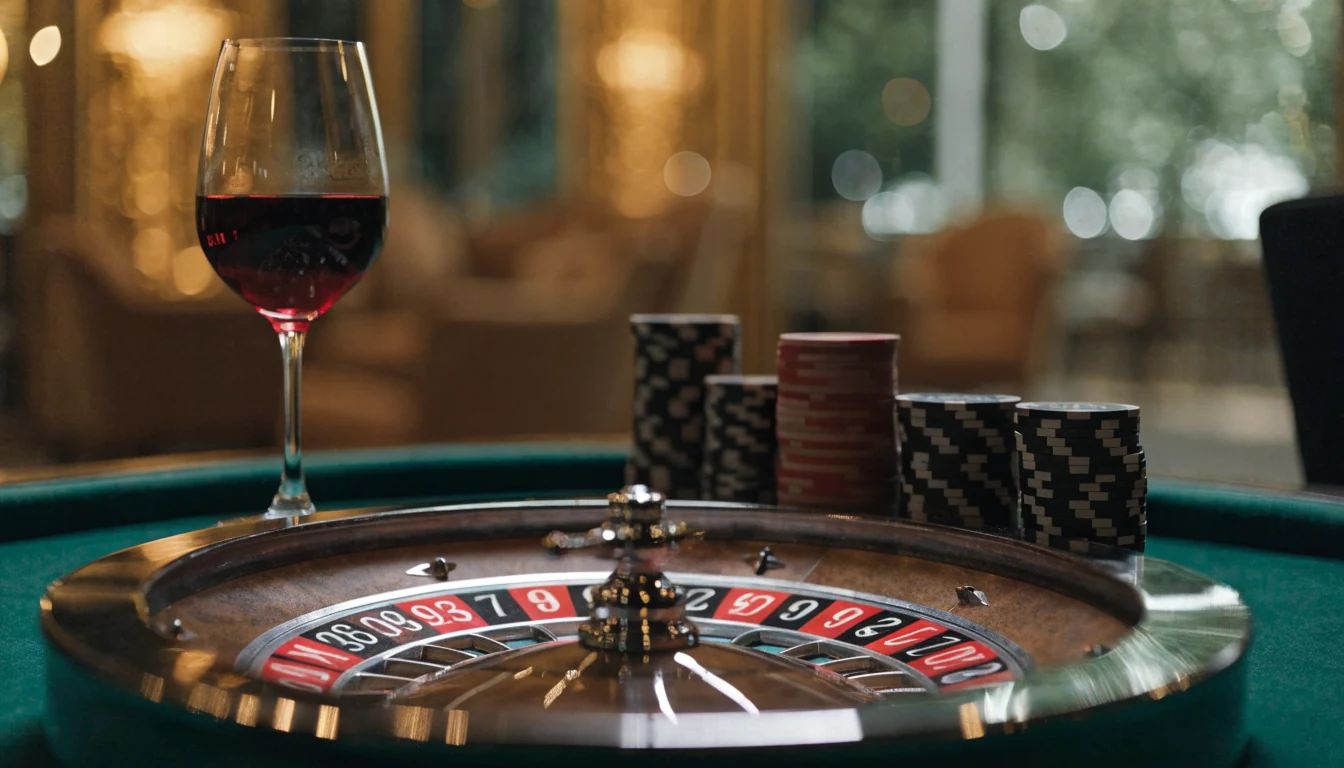
How Roulette Bets Work Across the Wheel
Roulette presents two different ways to organise a wager. A table-layout bet is selected from the printed arrangement of numbers and symbols on the betting surface. A wheel-position called bet instead groups numbers by where they sit around the wheel. The two approaches can refer to the same pockets, but they use different maps: one follows the felt, the other follows the physical sequence of the wheel.
On the layout, a bet can cover an individual number or a cluster of adjacent spaces. These are often described as inside bets. The position of the chip determines which number or group is covered, so a wager placed at a boundary can include more than one number. Outside bets sit beyond the main number grid and cover broader categories, such as a colour, odd or even results, or a low or high range. These categories are printed on the layout, making them distinct from groupings based on wheel order.
Called bets are arranged around wheel positions rather than neighbouring spaces on the table. A group of numbers that are close together on the wheel may appear far apart on the felt. Conversely, numbers beside one another on the layout do not necessarily sit beside one another on the wheel. This distinction matters when a game offers called bets or when a player is trying to understand which pockets a named wheel grouping includes. The bet is not a prediction about where the ball will land; it is a way of placing several related selections together.
Choosing roulette at an online casino involves more than the game itself, so it helps to check the details available for each option. Use this list as a starting point when considering roulette sites for New Zealand players in 2026.
-
7Bit Casino
- License
- Tobique Gaming Commission, licence no. 0000091
7Bit Casino lists a licence from the Tobique Gaming Commission, number 0000091.
-
Ricky Casino
- License
- Tobique Gaming Commission, licence no. 0000002
Ricky Casino lists a licence from the Tobique Gaming Commission, number 0000002.
-
N1 Casino
- License
- Malta Gaming Authority, licence no. MGA/B2C/394/2017
N1 Casino lists a Malta Gaming Authority licence, number MGA/B2C/394/2017.
-
BitStarz
- License
- Curaçao Gaming Authority, licence no. OGL/2024/165/0185
BitStarz lists a Curaçao Gaming Authority licence, number OGL/2024/165/0185.
-
Play Grand
- License
- Malta Gaming Authority, licence no. MGA/B2C/370/2017
Play Grand lists a Malta Gaming Authority licence, number MGA/B2C/370/2017.
-
Wintino
- Payout speed
- 1-3 business days
Wintino lists a payout speed of 1–3 business days.
-
Zotabet
- License
- 07017519840
- Payout speed
- 1-3 business days
Zotabet lists licence number 07017519840 and a payout speed of 1–3 business days.
-
Lamabet
- Payout speed
- 1-3 business days
Lamabet lists a payout speed of 1–3 business days.
-
Neospin
- License
- Tobique Gaming Commission, licence no. 0000064
Neospin lists a licence from the Tobique Gaming Commission, number 0000064.
This also explains why asking which are the best roulette bets has no single answer independent of the intended coverage. An individual-number selection targets a narrow outcome, while a broader layout bet includes more possible results. A wheel-based call covers its own defined set of positions. Those choices differ in scope and in the way the wager is placed; the labels alone do not establish that one is a reliable way to win.
The wheel variant also affects how the layout should be read. European and French roulette use a single-zero wheel layout. American roulette includes a single zero and a double zero, so its printed layout has an additional zero space. These differences change the set of possible outcomes represented by the wheel and table. A bet name may look familiar across variants, but the complete layout and the applicable rules still need to be understood before the wager is placed.
French roulette illustrates why the type of bet matters as much as the wheel. Its wheel layout matches European roulette, but it can include La Partage and En Prison. These rules concern only even-money outside bets, and only when zero lands. They do not apply to inside selections or to a called bet simply because it covers several wheel positions.

With La Partage, zero results in half of the stake on an eligible even-money outside bet being returned; the remaining half is collected. Under En Prison, the eligible bet is held for the next spin. If that spin wins, the original stake is returned without extra winnings; if it loses, the stake is collected. These rules alter the treatment of a particular bet after zero, not the way its numbers are grouped. A red-or-black wager, for instance, remains an outside bet; an individual number remains an inside selection.
For that reason, the phrase best bet can refer to different questions: whether a wager covers a narrow or broad set of outcomes, whether its numbers follow the table or the wheel, or whether a special rule applies to its category. Those are separate features. A zero rule that benefits an eligible even-money outside bet does not extend to every bet on a French table, and a wheel-based grouping does not acquire special treatment merely because it is called by name.
Before placing a wager, the relevant distinction is therefore structural. The table indicates which numbers or categories a layout bet covers; a called bet is defined by wheel positions. The variant determines which pockets are present, while the table rules determine how a qualifying wager is handled when zero appears. Knowing these categories helps clarify what a bet includes, but it does not identify a best number or a method for beating the table.
European Roulette
Uses a single-zero wheel layout with a house edge of 2.70%.
American Roulette
Includes both a single zero and a double zero, resulting in a 5.26% house edge.
French Roulette
Uses a single-zero wheel and can include La Partage or En Prison rules to reduce the edge on eligible bets.
Comparing Roulette Odds and Payout Percentages
Roulette odds depend on the wheel and, in some versions, on rules that change what happens when zero lands. House edge and payout percentage describe related but distinct aspects of the game: the house edge is the casino’s theoretical share of stakes over time, while a payout percentage expresses the corresponding theoretical return. Neither figure predicts the result of an individual spin.
European Roulette has 37 pockets, with one zero, and a house edge of 2.70%. An affiliate review reports its payout percentage as 97.30%. American Roulette has 38 pockets because it includes both a single zero and a double zero. Its house edge is 5.26%; an affiliate review gives its payout percentage as 94.70%. The difference reflects the additional pocket: for bets whose payouts are otherwise unchanged, a larger share of the total stake is retained by the house.
French Roulette uses the same single-zero wheel layout as European Roulette, but its special rules can alter the edge on eligible bets. When La Partage or En Prison applies, the house edge on even-money outside bets falls to 1.35%. This figure should not be treated as the edge on every French Roulette bet: those rules apply only to even-money outside bets and only when zero lands. They do not change the underlying wheel or make every wager carry the reduced edge.

The comparison therefore depends on the wager as well as the variant. For an even-money outside bet under the specified French rules, the reduced edge makes French Roulette more favourable than the ordinary single-zero European game. The same reduction does not apply to other bet types. A table labelled French Roulette should not, by its name alone, be assumed to apply La Partage or En Prison; the relevant rule needs to be stated in the table information.
The figures also explain why a simple ranking by payout can be misleading. European Roulette’s reported 97.30% return is higher than American Roulette’s reported 94.70%, consistent with their respective house edges. Those payout figures are reports from an affiliate review, rather than a universal specification for every table carrying those names. The house-edge figures, by contrast, describe the stated wheel structures. In practice, the exact rules attached to a game matter when interpreting any displayed return.
The label 100/1 roulette is associated with a payout-percentage range rather than one fixed figure. An affiliate review reports a range from 92.86% to 96.19%. That span is broad enough that the label alone does not establish a precise return. The relevant game rules and the basis for a displayed percentage remain important; the range should not be read as a guaranteed outcome or as a prediction for a particular session.
For a player comparing the best odds at roulette, the clearest distinction is between a wheel’s ordinary house edge and a rule-specific reduction. European Roulette’s single-zero structure carries a lower stated edge than American Roulette’s double-zero structure. French Roulette can improve the edge on eligible even-money bets when its zero rules are in force. A payout percentage offers another way to express theoretical return, but figures reported for a variant should be read with their source and conditions in mind.
These comparisons concern long-run mathematical expectations, not certainty. A higher theoretical return does not ensure that a particular bet wins, and a lower house edge does not remove the possibility of losing the entire stake. A roulette simulator may display outcomes or rules, but its usefulness for comparing odds depends on whether it accurately identifies the variant and the rules being applied. The mathematical distinction remains the same: wheel layout establishes the baseline, while qualifying zero rules can modify the edge on specified wagers.
Choosing an Online Casino for Roulette in New Zealand
Assessing an online roulette service in New Zealand requires attention to the country’s changing legal framework, not merely to its game catalogue or bonus headline. The Online Casino Gambling Act 2026 established a domestic licensing system and took effect on 1 May 2026. Its transition period runs until 1 December 2026, while the full licensed regime is not expected to be operating until 2027.
The transition has specific limits. Providers that were already serving people in New Zealand before the Act took effect may continue until 1 December 2026 under its transitional provisions. A provider that has not applied for a licence must cease online casino gambling in New Zealand by that date. The Act also provides for enforcement against unlicensed operators, including fines of up to NZ$5 million. These provisions concern providers; the legal framework does not make a player liable to a fine or criminal prosecution for using an offshore casino.

Before the new law, online casino services supplied from outside New Zealand were not licensed or supervised by a New Zealand regulator. Customers using those services had no domestic government recourse. The new system changes the institutional setting, but during the transition it should not be treated as though the complete domestic licensing regime is already in place. New Zealand prohibits online casinos based in the country, and the Gambling Act 2003 does not permit them to operate domestically.
What the licensing framework changes
The Department of Internal Affairs is New Zealand’s primary gambling regulator and oversees regulation of the online casino licensing framework. The Gambling Commission hears and determines casino licensing applications, issues online casino licences, and approves changes to licence conditions. These responsibilities are distinct: the Department oversees the wider framework, while the Commission makes licensing decisions.
For an assessment of an online service, the relevant question is therefore its status under the rules applying at the time, including whether it is operating under transitional provisions or within the later licensing regime. A general claim that a casino is “regulated” does not, by itself, establish which authority applies or what protections are available. Licensed operators will have to implement stricter age and identity verification systems, but that requirement should not be confused with proof that every service currently accessible in New Zealand already holds a domestic licence.
This context also limits what can responsibly be said about the best online casino for roulette. A ranking or app recommendation cannot substitute for evidence of the provider’s legal status, and the transition rules do not support presenting a list of operators as though the fully licensed market were already settled. Nor does the availability of an app establish anything about licensing: a roulette game offered through a browser or mobile application remains part of the provider’s online casino service.
Reading bonus terms as conditions, not value claims
Advertised casino bonuses can be subject to eligibility rules, wagering requirements, expiry dates, game-contribution rules and withdrawal restrictions. The headline offer alone does not show how much of a bonus can be used for roulette, when it expires, or what happens if a withdrawal is requested. Those details affect whether an offer is usable, but they do not establish that it is beneficial.
The wagering terms should be stated plainly. Bonus money must be wagered 50X within 30 days. Winnings from free spins must be wagered 50X within 7 days. A withdrawal request voids all active or pending bonuses. These conditions matter even where the promotion is described as free, because the funds or winnings may remain subject to wagering and other restrictions before withdrawal.
Game contribution is another material term. A promotion may count play on different games differently, so the stated wagering requirement should not be read as though every roulette stake necessarily contributes equally. Eligibility and expiry conditions can also determine whether a player qualifies and how long the offer remains available. Any comparison of casino roulette bonuses should therefore include the full terms, rather than relying on the advertised amount or a “no wagering” label that may not describe the offer’s actual conditions.

These checks provide a more meaningful basis for comparing services than claims about the best roulette combination or a supposed system. Bonus conditions concern the promotion; they do not change roulette’s rules or guarantee a favourable result. A free online roulette game may allow the game to be examined without real-money stakes, but that alone says nothing about the provider’s licensing position or the conditions attached to a separate real-money offer. The distinction between game access, legal status and bonus eligibility should remain explicit.
During the transition, promotional claims also need particular care: providers are prohibited from advertising online casino gambling to people in New Zealand. Accordingly, bonus copy should not be treated as a recommendation or assurance that a service is authorised under the new regime. The licensing framework, transition deadline and written promotion terms are separate matters, and each requires its own assessment.
Roulette Betting Systems and Their Limits
Roulette betting systems prescribe how stakes change from one wager to the next. They do not alter the wheel or determine which result will appear. A sequence may therefore organise play, but it cannot make a future spin more predictable or turn a losing proposition into a winning one.
A system can be based on a fixed stake, a progression after wins, or a progression after losses. Fixed staking keeps the amount wagered consistent, while progressive approaches change it according to the sequence of results. These methods describe stake management, not an advantage over the game. The apparent logic of a progression should not be confused with evidence that it improves the chance of a favourable outcome.
Do
- Use a fixed staking method to keep wagers consistent.
- Set a personal budget and a stopping rule.
Don't
- Use loss-chasing progressions like the Martingale.
- Assume a betting system can overcome the house edge.
The Martingale is a familiar loss-chasing progression: after a loss, the stake is increased, commonly by doubling it, in an attempt to recover earlier losses when a win arrives. That plan depends on a win occurring before the required stake becomes unaffordable or a table limit prevents the next increase. A losing run can make the required stake grow rapidly, while a win does not erase the uncertainty of subsequent spins. The Martingale is not a winning strategy, and its progression cannot remove the house edge.
Other systems may increase stakes after wins or alternate increases and decreases according to a chosen sequence. Such rules can produce different patterns of stake size and session balance. They do not change the probabilities governing roulette outcomes. Roulette spins are independent: results already observed do not affect the probability of outcomes on later spins. A sequence that appears to be developing in a particular direction therefore provides no reliable signal for the next wager.
This distinction also matters when assessing claims about the best roulette betting system. “Best” may refer to a preferred way of controlling stake size, but it cannot be established as a method for reliably winning. A system can set a stopping point or make wagering more structured; neither function gives it predictive power. Claims that a particular online roulette system guarantees recovery, exploits a pattern, or overcomes the game’s underlying advantage go beyond what stake sequences can establish.

A useful assessment separates three questions: what the system instructs, what happens to stake size during a run of results, and whether it changes the chance of an outcome. The first two can be described from the rules of the system. The third has no support in a staking pattern when spins remain independent. A run of losses may be followed by a win, but the earlier losses do not make that win due.
Systems can also obscure the amount exposed to risk. A modest opening stake may lead to much larger wagers under a progression, particularly when losses continue. The total amount at risk is therefore not captured by the first stake alone. Any real-money bet can lose, and no stake should exceed what can be afforded to lose. Setting a personal budget or a stopping rule can limit exposure, but neither changes the outcome probabilities.
The evidence supports a narrow conclusion: betting systems can describe how stakes are arranged, but they cannot predict roulette results or guarantee profit. A fixed pattern may suit a preferred style of play; a progressive pattern may feel more purposeful. Neither is a winning system in the mathematical sense.
Roulette Apps on iPhone and Android: What the Game Math Can Tell Us
A roulette app can be assessed by how clearly it identifies the game being offered and explains its rules. The device itself does not change roulette probabilities: an iPhone, iPad or Android phone displays the game, while the wheel variant and its rules determine the mathematical conditions of play. A polished interface is not evidence of a more favourable outcome.
The name of a game is not enough to establish its rules. An app should make clear which roulette variant is selected and what happens under its stated rules. If that information is difficult to find, comparisons between games become unreliable. Visual details such as the table design, animation or presentation do not resolve uncertainty about the underlying game.
The distinction between a free-play app and a real-money game also matters to how the experience is interpreted. A simulated spin can demonstrate the interface and the sequence of play, but a run of simulated results does not provide evidence about what a later real-money spin will produce. In either setting, the display of recent outcomes may invite pattern-seeking, yet it does not change the probability structure of the game.
Roulette spins are independent. Results shown earlier in an app do not alter the probability of outcomes on a later spin. A streak, a repeated result or a long gap since a particular outcome can be visible in the history without making that outcome more or less likely next. The app’s record is a description of past play, not a forecast.
This principle applies across devices. Switching from an iPad to an iPhone, or from an Apple device to an Android phone, cannot make previous spins predictive. Nor does an app’s speed, animation style or presentation provide a mathematical advantage. These features may affect usability, but they should not be confused with the rules governing the game.

A careful comparison therefore begins with the information displayed about the roulette variant, the rules attached to it and whether the app clearly distinguishes demonstration play from real-money play. Where those details are absent or ambiguous, claims about what the app offers cannot be assessed confidently. A “best” app label is not, by itself, evidence of improved odds or more predictable results.
The central distinction is between the software interface and the chance process represented on screen. Interface choices can make rules easier or harder to inspect; they cannot make independent spins depend on one another. App selection is consequently a matter of clarity and suitability, not a means of changing roulette outcomes.
Wheel-Based Strategies and French Roulette Rules
Wheel-based called bets describe groups of pockets by where their numbers sit around the wheel. This is a different way of organising selections from the table layout, where numbers are arranged in rows and columns. A wheel-based spread therefore follows the physical sequence of pockets rather than a pattern visible on the betting cloth.
That distinction can help describe a bet, but it does not make the selection predictive. A group of neighbouring pockets may be convenient to identify as a unit, yet their positions do not establish that they are more likely to appear. Roulette outcomes remain random, and the arrangement of numbers around the wheel supplies no evidence that a particular section is due.
The phrase “best roulette strategy” can refer to two different aims: choosing a grouping that is easy to follow, or finding a method that improves the expected result. Wheel-based calls can serve the first aim. Their structure alone cannot establish the second. A broad spread of called bets may cover more wheel positions than a narrow one, but coverage is not a forecast and does not guarantee a return.
French Roulette Rules
French roulette can include La Partage and En Prison rules. La Partage returns half the stake on eligible even-money outside bets when zero lands. En Prison holds the eligible bet for the next spin.
French roulette changes the treatment of zero for certain bets. Its wheel has the same single-zero layout as European roulette, while rules such as La Partage and En Prison affect eligible even-money outside bets when zero lands. La Partage is exclusive to French roulette. Under that rule, half the stake on an eligible bet is returned and the remainder is collected. En Prison instead carries the bet forward: a win on the next spin returns the original stake without extra winnings, while a loss means the stake is collected.
These provisions do not apply to every type of wager. Their relevance is limited to even-money outside bets, so they do not turn wheel-based called bets into protected or more predictable selections. In particular, a wheel spread should not be confused with an even-money bet merely because it covers several pockets; the applicable rules depend on the wager placed and the table’s rules.
For even-money bets, French roulette offers the most favourable odds among the variants described here because of La Partage and En Prison. Where La Partage applies, the effective house edge on an eligible bet is reduced when zero lands. That is a rule-based difference in how a losing outcome is handled, not a method for anticipating whether zero or any other pocket will appear.
A useful distinction is therefore between organisation and probability. Wheel positions provide a basis for naming and grouping called bets; French rules alter the settlement of specified even-money bets after zero. Neither feature supports a system for predicting the next result. A selected wheel section can be clearly defined without being more likely to win.

Practical Roulette Tips Without Claims of a Winning Play
A practical approach to roulette begins with treating each real-money bet as money that may be lost. Outcomes are random, and no choice of stake or timing can make a result certain. This is a limit on what any tip can establish: a cautious routine may help keep play within personal boundaries, but it cannot turn roulette into a reliable way to make money.
Before play begins, decide what amount can be lost without affecting essential expenses or other financial commitments. Treat that amount as a firm ceiling, rather than a target to use up or a sum to recover after a loss. If the amount is reached, stopping is the only way to prevent further roulette losses during that session. A later win is not assured, and a previous loss does not create an obligation to continue.
It can also help to decide in advance when play will end. A time boundary is a practical safeguard against letting a session expand in response to changing results. The boundary should not be extended merely because a spin has been unlucky or because a win seems close. Neither impression provides evidence that the next outcome will be more favourable.
A useful check during play is whether the original limit still feels manageable. If attention shifts from the planned amount to recovering losses, or if continuing would require money set aside for other purposes, play should stop. These are reasons to pause, not signals that another bet is due. No betting pattern can remove the possibility of losing a stake.
- Decide on a maximum amount that can be lost.
- Set a firm time boundary for the session.
- Establish a stopping rule if the planned budget is reached.
The best tips for roulette are therefore about limits, not a supposedly best play. Choosing a bet, changing its size or waiting for a particular moment cannot guarantee a profit. Each spin is independent: earlier results do not alter the probability of outcomes on a later spin. A run of wins does not establish that winning will continue, and a run of losses does not make a win due.
For anyone comparing roulette options, the same restraint applies across games: the label or presentation does not change the uncertainty of a real-money result. A sound decision is one that remains affordable even if every bet in the session loses. If that condition cannot be met, not playing is the safer choice. Roulette should not be treated as a source of income or as a way to solve financial pressure; its outcomes cannot provide a dependable remedy.
Why No Roulette Number Is Favoured by Past Spins
A number that has appeared several times in recent roulette results is not thereby more likely to appear on the next spin. Nor does a number become “due” after a long absence. Both ideas treat a sequence of independent outcomes as though it were a pattern that must correct itself. In roulette, previous results do not change the probability of any outcome on a future spin.
This distinction matters when choosing a number. A run of results may look meaningful, but it describes only what has already happened. It does not provide evidence that the next result will continue the run or reverse it. A displayed history can record outcomes; it cannot make one number more favoured by the wheel.
The phrase “best number in roulette” therefore has no statistical answer based on past spins. A number may be selected for personal reasons, but that choice does not improve its chance of appearing. The same applies to lists of numbers that seem to recur often: their past appearances do not give them an advantage in a later spin.
The relevant probability depends on the game being played, including the wheel’s pockets and rules, not on the order in which earlier results appeared. That does not mean every roulette variant gives each number the same numerical probability; it means that a number’s previous results do not alter its future chance within the game. A history panel may show a streak, but the streak itself is not a predictive signal.
This also limits what can be inferred from a short record. A small cluster of repeated numbers can occur without establishing a lasting tendency. Likewise, an absence in recent results cannot demonstrate that a number is more likely to appear next. Observed sequences can be described after they occur, but they do not identify a reliable “best” number for a future spin.
Number selection is consequently a matter of preference rather than a method of forecasting. Past results may be interesting to review, but they do not shift the odds of the next outcome. Roulette remains unpredictable at the level of an individual spin, and no number can be justified as favoured merely because of its recent history.
Roulette Variants and the Trade-Off in Mini Roulette
Mini Roulette illustrates why a smaller wheel does not necessarily make a game more favourable. Its 13 pockets are fewer than those on standard European or American wheels, but the relevant comparison is not the physical size of the wheel. It is the relationship between the rules, the possible outcomes and the payouts.
The stated house edge for Mini Roulette is 7.89%. That figure is higher than the stated edge for standard single-zero European Roulette. The smaller pocket count therefore does not, by itself, imply better odds. A variant’s name or compact layout says little about its mathematical cost; the published rules and payout structure are what determine the comparison.
La Partage changes the calculation for eligible even-money bets when zero appears. Under that rule, half of the stake is returned rather than being lost in full. For Mini Roulette, the house edge falls to 3.85% when La Partage applies. This is a substantial reduction relative to the version without the rule, but it does not erase the house advantage.
The difference matters when assessing which roulette game may be more suitable for a particular preference. A player focused on even-money wagers may regard the La Partage version as less costly in expected terms than Mini Roulette without that rule. That is a comparison of game conditions, not a prediction about the result of an individual spin. The rule only changes the settlement when zero lands; it does not make wins certain or protect every type of bet.
There is also no best strategy for roulette that can be inferred from the wheel’s smaller size. Mini Roulette’s edge remains part of the game’s structure, and a different stake pattern cannot turn that edge into a player advantage. The useful distinction is between versions with different rules, especially whether La Partage is present, and betting approaches that do not alter those rules. A clear statement of the variant and its zero treatment is therefore necessary for interpreting its stated edge.

Zero and Double Zero: A Tactic Is Not a Guarantee
A half-stake return on zero or double zero is not a standard feature of American roulette. A specialist review describes this rule at some Atlantic City tables, where an even-money bet may receive half its stake back if either zero appears. Because the rule is table-specific and can change, it should not be treated as a general feature of American roulette.
The distinction matters when assessing claims about the best roulette tactics. A partial return changes how an eligible bet is settled after a particular result; it does not make that result predictable or turn a losing spin into a win. The returned portion is not a profit, and the rest of the stake is lost. Any claimed advantage therefore depends on the precise rule in force, rather than on a betting sequence or a supposed ability to influence the wheel.
Before placing a bet, the table rules need to state what happens on both zero and double zero. A description that refers only to “zero” may not explain the treatment of double zero, while a general label such as American roulette does not establish that half the stake will be returned. The stated settlement terms are more informative than assumptions based on a table’s location or variant name.
This limited rule should not be confused with a best tactic to win in roulette. It provides no guarantee of a positive result, and it does not remove the possibility of losing the full amount on other outcomes. No betting approach can make the table-specific provision reliable as a source of winnings. The careful conclusion is narrower: some Atlantic City American roulette tables have been reported to return half of an even-money stake when zero or double zero lands, but that provision is not standard and must be confirmed for the individual table.
Casino Games in New Zealand: An Overview
Content created by the «casinoslotsnz.com» team