
Make sense of live-table rules before you play
 Available in US
A practical overview of blackjack hand values, table decisions, payouts and the conditions that shape online live play.

Blackjack Rules, Decisions and Payouts
Blackjack is played against the dealer. The central objective is to finish with a hand closer to 21 than the dealer’s without going over 21. A hand exceeding that total loses, so each decision balances the value of improving the hand against the risk of exceeding the limit.
Card values and hand totals
Number cards count at face value, while every face card counts as 10. An ace can count as either 1 or 11, depending on which value gives the hand the more useful total without exceeding 21. This flexibility makes an ace-containing hand different from one with the same total formed only from fixed-value cards: the ace can sometimes absorb a change in the hand’s total as cards are added.
A natural blackjack is an opening hand consisting of an ace and a card worth 10. Its payout is not uniform across tables. A specialist review reports both a 3:2 payout and a 6:5 payout for a natural blackjack, so neither figure should be assumed without checking the stated rules for the particular game. The distinction matters because a payout rule changes what a winning natural returns, even though it does not change the card values or the objective of the hand.
For New Zealand players considering live blackjack, a shortlist can help organise the options to check. Confirm current table availability and terms before choosing.
-
7Bit Casino
- License
- Tobique Gaming Commission, licence no. 0000091
The listed licence is from the Tobique Gaming Commission, number 0000091. No live-blackjack-specific details are provided.
-
Ricky Casino
- License
- Tobique Gaming Commission, licence no. 0000002
The listed licence is from the Tobique Gaming Commission, number 0000002. No live-blackjack-specific details are provided.
-
N1 Casino
- License
- Malta Gaming Authority, licence no. MGA/B2C/394/2017
The listed licence is from the Malta Gaming Authority, number MGA/B2C/394/2017. No live-blackjack-specific details are provided.
-
BitStarz
- License
- Curaçao Gaming Authority, licence no. OGL/2024/165/0185
The listed licence is from the Curaçao Gaming Authority, number OGL/2024/165/0185. No live-blackjack-specific details are provided.
-
Play Grand
- License
- Malta Gaming Authority, licence no. MGA/B2C/370/2017
The listed licence is from the Malta Gaming Authority, number MGA/B2C/370/2017. No live-blackjack-specific details are provided.
-
Wintino
- Payout speed
- 1-3 business days
The stated payout speed is 1–3 business days. No live-blackjack-specific details are provided.
-
Zotabet
- License
- 07017519840
- Payout speed
- 1-3 business days
The listed licence identifier is 07017519840, and the stated payout speed is 1–3 business days. No live-blackjack-specific details are provided.
-
Lamabet
- Payout speed
- 1-3 business days
The stated payout speed is 1–3 business days. No live-blackjack-specific details are provided.
-
Neospin
- License
- Tobique Gaming Commission, licence no. 0000064
The listed licence is from the Tobique Gaming Commission, number 0000064. No live-blackjack-specific details are provided.
The main decisions
The standard choices are to hit, stand, double down or split. Depending on the table rules, surrender may also be available.
- Hit means taking another card. This can improve a low total, but it also creates a possibility of going over 21.
- Stand means taking no further cards and keeping the current total for comparison with the dealer’s hand.
- Double down means increasing the wager in connection with the hand and taking a further card under the applicable rules. Its value depends on the hand and the table conditions; it is not simply a way to improve any position.
- Split becomes relevant when the opening cards form a pair. The pair is separated into two hands, each of which is then played under the game’s rules. This creates another decision for each resulting hand, rather than changing the goal of reaching a strong total without exceeding 21.
- Surrender, where offered, allows a player to give up the hand under the table’s terms rather than continue it. Its availability and operation therefore need to be read from the game rules.
These choices are not interchangeable. Hitting adds a card without changing the original wager in the same way as doubling down; standing preserves the current total; splitting changes one hand into two. The relevant choice depends on the cards and on the rules governing the table. No single action is a reliable shortcut across all hands and variants.
Why table rules matter
Blackjack rules differ between games. The number of decks, the dealer’s treatment of a soft 17, surrender availability and the payout for a natural blackjack can all vary. A soft 17 is a total of 17 that includes an ace counted as 11; whether the dealer must take another card or stand on it is one of the conditions that can affect decisions and the game’s house edge. A specialist review identifies these rule differences as material features of blackjack variants, rather than details that can be presumed identical from one table to another.
The strategic effect follows from the interaction between the player’s options and the dealer’s rules. For instance, a decision made with an ace in the hand may be affected by whether that ace can still count as 1 after another card is taken. A split decision can also depend on the rules for the resulting hands. The dealer’s soft-17 rule changes how the dealer’s hand is played, while a payout rule affects the return on a natural. These are distinct elements of the game, but together they shape the conditions under which a decision is made.
The house edge is not determined by the name “blackjack” alone. Variants with different rules can produce different strategic conditions and different house edges. A comparison between tables therefore needs to distinguish the shared objective and card values from the rules that govern decisions and payouts. The same apparent hand can carry different implications where the available actions or dealer rules differ.
For live casino blackjack, the practical reference is the specific table’s rules, not a general description of blackjack. The listed payout for a natural, the dealer’s soft-17 treatment, deck count and surrender rule are among the conditions that define the game. Where these differ, an assumption carried over from another table may not apply. Side bets are not part of the basic objective described here; they are separate from the core decisions of hitting, standing, doubling down or splitting, and their terms require separate consideration.
New Zealand’s Online Casino Framework in 2026
Live blackjack online sits within a regulatory transition in New Zealand rather than a fully operational domestic licensing system. The Online Casino Gambling Act 2026 took effect on 1 May 2026, establishing the country’s first domestic framework for licensing online casino gambling. Its introduction marks a change from the preceding position, in which online casinos could not be based in New Zealand and services supplied from overseas were not licensed or supervised by a New Zealand regulator.
The transition does not mean that every online casino serving New Zealand customers immediately became locally licensed. Providers that were already operating in the market before the Act began may continue during the transitional period, subject to the Act’s provisions. That period runs from 1 May to 1 December 2026. The full licensing regime is not expected to be operational until 2027, so the regulatory status of a service in 2026 depends in part on this transition and on the provider’s circumstances.

This distinction matters when interpreting references to a live blackjack casino or a casino live blackjack table. The format of a game does not itself establish the legal status of the company supplying it. A streamed table may offer live-dealer play, but its presence online does not show that its operator holds a New Zealand licence. Nor does the new legislation mean that all providers serving New Zealand are already subject to the final licensing system. The relevant framework is being introduced in stages.
The Department of Internal Affairs (DIA) is New Zealand’s primary gambling regulator and oversees regulation of the online casino licensing framework. The Gambling Commission has a separate, defined role within that framework: it hears and determines casino licensing applications, issues online casino licences, and approves changes to licence conditions. In practical terms, the DIA’s oversight and the Commission’s licensing decisions are related parts of the system, but they are not interchangeable functions.
The Commission’s responsibility for applications is particularly relevant during the transition. Providers already operating before 1 May 2026 may continue until 1 December 2026, but continuation during that window should not be read as proof that a licence has been granted. Providers must cease online casino gambling in New Zealand by 1 December if they have not applied for a licence. If an application is declined, the provider must stop its online casino gambling operations in the country and leave the market. The legislation therefore connects the transitional permission to a process that leads towards the future licensing regime.
The distinction between historical and current arrangements is also important. Before the new Act, overseas online casino gambling was not overseen by a domestic licensing authority, and customers wagering with offshore websites had no domestic government recourse. The 2026 framework changes the regulatory structure, but the transition means that this change is not instantaneous. In particular, the full licensed system is not expected to be in operation until 2027, while the transitional window has a defined end date in December 2026.
The framework also places conditions on how the market may operate as licensing is introduced. Advertising by licensed operators is permitted only under tight rules, and sponsorships are prohibited. During the transition period, advertising to people in New Zealand is prohibited. Licensed operators must also use stricter age and identity verification systems. These requirements concern the conduct and oversight of operators; they should not be confused with the rules of an individual blackjack game or the way a particular table handles a hand.
Enforcement provisions form another part of the developing system. Unlicensed operation is expected to become an offence from around mid-2027, and providers operating without a licence may face enforcement action and fines of up to NZ$5 million. Those provisions do not change the transition dates: existing providers covered by the transitional arrangements may continue until 1 December 2026, while providers that have not applied must cease by then. If a licence application is refused, the provider must exit the New Zealand market rather than continue operating casino services there.
Accordingly, “live blackjack NZ” can refer to a game format available online, but it does not by itself describe the supplier’s regulatory position. In 2026, that position has to be understood against the Act’s commencement, its transitional provisions and the division of responsibilities between the DIA and the Gambling Commission. The regulatory framework is being established; it should not be treated as though the final domestic licensing regime were already fully in force.

Live-Dealer Blackjack Compared with RNG Games
The central difference is how each format presents the game. In live-dealer blackjack, a person deals actual cards at a table, and the action reaches the online screen through a video stream. In RNG blackjack, software determines the cards and shuffles them electronically. Both formats use blackjack rules, but the process and pace of play are not the same.
The live format can resemble a casino table because the cards are physically dealt rather than represented only by software-generated game images. The streamed view gives the game a visible dealer and table setting. That distinction concerns presentation and dealing; it does not, by itself, establish that one format has more favourable rules or a better chance of winning. Those questions depend on the particular game conditions, not simply on whether cards are dealt in person or generated by software.
RNG games generally move faster. Software handles the shuffle and the game sequence, so there is no need to wait for streamed table activity. This can make the format better suited to a quicker pace of play, although the speed does not mean that the game is more favourable to a player. It is a difference in how quickly rounds can proceed, not evidence of a difference in the underlying chances.
A live table has a different rhythm. The dealing is real, and the stream may introduce delays between stages of play. Connection quality and the presentation of a streamed game can therefore affect how quickly a round proceeds. Live blackjack may also require higher bets than an RNG alternative. These conditions matter when comparing formats, since the experience of a real table can come with slower play and a higher entry requirement.
Live-Dealer Blackjack
A person deals actual cards at a physical table, which is then broadcast via a video stream.
RNG Blackjack
Software determines the cards and shuffles them electronically, allowing for a faster pace of play.
For someone considering live blackjack in New Zealand, the distinction is useful when deciding which kind of online game matches the intended pace and style of play. The live version offers the visual context of actual cards and a dealer; the software version prioritises speed. Neither description should be taken as a general claim about the quality of every game in that category. Specific table rules can differ, and the format alone does not settle those details.
The two formats also should not be treated as interchangeable merely because both are called blackjack. A live stream represents a physical dealing process, while an RNG game relies on software shuffles. That is a concrete difference in how outcomes are produced and shown. It is not a basis for assuming that a live game is inherently more predictable, or that an RNG game is inherently less reliable. Such conclusions would require evidence about the particular game and its operation.
The practical comparison is therefore between immediacy and table presence. Software-based games allow faster play; live-dealer games retain the feel of a casino table but can be slowed by streaming and may have higher betting requirements. For live blackjack compared with RNG play, these are the established trade-offs. The available distinction does not show that one format is universally preferable: the relevant choice depends on whether speed or a streamed, physical table setting is more important, alongside the conditions of the individual game.
Free Play and the Limits of Practice Games
Practice play can help familiarise a player with blackjack’s pace and choices, but it is not necessarily the same experience as joining a live-dealer table. A free-play mode, where one is offered, may use software to run the game rather than stream an actual dealer. The label alone does not establish how the game is produced, so the format needs to be identified from the game information.

That distinction matters when the purpose is to practise for live blackjack. Online blackjack using random number generator (RNG) software shuffles cards through software and allows faster play than a live-dealer game. A practice session in that format can therefore move through decisions more quickly. It may provide a way to rehearse the basic sequence of play, but speed and presentation do not necessarily reproduce the timing of a streamed table.
Free play also has limits as a guide to the conditions of any particular game. The label does not, by itself, establish which rules are used, whether a dealer is present, or whether the same conditions would apply at a live table. Those details have to be assessed separately. A practice mode should not be treated as evidence that a particular live table is available in free mode, or that its play would match a software version.
For someone learning how decisions fit together, slower practice can be useful if it leaves time to consider each choice. Faster software play can instead provide more repetitions in less time, but a larger number of hands does not by itself show that the live format will feel identical. Each approach offers a different kind of familiarity: one with software-paced play, the other with the streamed-table format when that format is actually being played.
Practice is also distinct from predicting results. Rehearsing decisions does not make an individual hand predictable, and repeated play should not be mistaken for evidence that a system guarantees a win. Its narrower value is helping a player understand how the game proceeds and recognise the decisions that arise.
The phrase “live blackjack free play” can describe an intended practice experience, but it does not confirm that any specific provider offers one. Where free access is available, the game description should make clear whether it is a software game or a live-dealer stream. Without that distinction, practice may build familiarity with blackjack while leaving the pace and format of live play untested.
Practice conditions should also be kept separate from the conditions of play involving money. A simulated session cannot, on its own, establish what applies at a live table. It can be treated as rehearsal, not as a substitute for checking the game’s own information or as proof of how a different format will operate. This is the central limit of free practice: it can help with familiarity, while its relevance depends on how closely the practice game corresponds to the experience being considered.
Playing Live Blackjack Online
Live blackjack is conducted at a physical table, with a dealer handling actual cards while a camera feed carries the game to online participants. The streamed table is the defining feature: the cards are not simulated as part of the live hand, and the dealer’s actions can be observed as play unfolds. In that respect, the format resembles a casino table, although the view reaches players through a screen rather than from a seat beside the dealer.
The stream also shapes the pace of a hand. A card must be dealt, its result shown, and the next stage of play transmitted before the game can proceed. Video delivery may introduce delays, so online live play need not move as quickly as a participant expects from a seamless digital interface. The delay is part of the format, not evidence that a hand is being dealt by software. Connection quality and the time taken for the table to progress can affect how continuous the experience feels.

Betting conditions may differ from those of other blackjack formats. Live tables may require higher bets, which can make the format less accessible to people seeking a low-cost way to play. The applicable requirement belongs to the particular table, rather than being a universal feature of live blackjack. A title described as the best live blackjack online therefore has little meaning without reference to the conditions attached to the table: the live stream itself does not establish that a game is suitable for every budget or preference.
The physical dealing process is visible, but it does not make every element of the online experience identical to being in a casino. The game is mediated by video, and participants rely on the transmitted image and the table’s online interface. A delay can separate an action at the table from its appearance on screen. This distinction matters when describing the format: it is live because actual cards are dealt in a streamed game, not because transmission is instantaneous.
The phrase “live blackjack online free” can also blur two different ideas. A live-dealer table refers to streamed play with a dealer and physical cards; whether a particular service offers access without wagering is a separate matter. The format alone does not establish that free access is available. Nor does a free-play option, where offered, turn a software practice game into a streamed table experience.
For New Zealand players, the practical features to distinguish are thus the live dealing, the video transmission, possible delays and the possibility of higher betting requirements. These conditions describe how online live play is delivered; they do not guarantee a particular pace or entry level. A live table remains a streamed casino-style game, with its accessibility shaped by the conditions of that table.
Mobile Access and Live-Table Conditions
A live blackjack table viewed on a mobile device remains governed by its game rules. The screen used to access the game does not, by itself, establish whether a particular version is favourable: blackjack variants differ, and those differences can alter both strategy and the house edge. An app comparison therefore needs to distinguish the mobile access route from the conditions of the table being played.
The label “best live blackjack app” is not meaningful without a defined basis for comparison. A table’s rules matter more than a general claim about the app. Variants may differ in how decisions are handled and in other conditions that affect the mathematical position of the game. Where the rules differ, a strategy suited to one table may not apply in the same way to another. Assessing a mobile option on its name or presentation alone would not resolve those differences.
The same caution applies to searches for the best live blackjack. “Best” could refer to different things, but the relevant comparison for play is whether the table’s rules are clear and how those rules affect the game. Mobile access does not remove the need to identify the variant. Nor does the fact that a table can be opened through an app establish that its rules match those of another table offered through a different route.
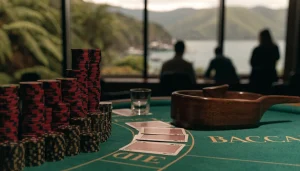
A useful distinction is between the device and the game conditions. A phone or tablet is the means of access; the blackjack variant determines the rules that shape decisions and house edge. Claims about app-specific tools or capabilities should not be treated as established without evidence about the particular product. In their absence, the sounder comparison remains centred on the stated table rules rather than presumed features of a mobile interface.
This also limits what can be concluded from an app’s general description. A single app may provide access to tables with differing rules, while a game’s mobile presentation says little about the underlying variant. The relevant conditions should therefore be considered at table level, not inferred from the word “app” or from broad promotional language. Where rule information is unclear, the strategic and mathematical implications cannot be assessed confidently.
Mobile access can change how a game is reached, but it does not make variant differences disappear. Comparisons should keep those two questions separate: whether access is mobile, and what rules govern the table. The second is the more consequential factor for blackjack strategy and house edge.
Bitcoin, Bonuses and Wagering Conditions
Bitcoin may be part of the payment terms considered when assessing online blackjack, but its mention does not establish that it can be used at a particular live table or casino. Payment methods, where offered, are subject to the operator’s terms. A payment option should not be treated as evidence that a game is available, that a bonus applies to it, or that a withdrawal will follow particular conditions.
Do
- Check the specific table rules for payouts and dealer actions.
- Read the fine print of bonus terms and wagering requirements.
Don't
- Assume a payout like 3:2 applies to every table.
- Treat a bonus as a guarantee of favourable terms.
A live blackjack bonus also needs to be assessed through its terms rather than its headline description. Wagering requirements set out how qualifying play is counted before bonus-related funds or winnings can be withdrawn. Blackjack may contribute differently from other games, so the stated contribution for blackjack matters. A bonus that appears relevant to live play may exclude the game or count it only partially; the terms determine which applies.
Maximum-bet rules are another material condition. During wagering, exceeding a stated maximum may affect eligibility for bonus funds or associated winnings. The rule should be read alongside the qualifying-game list, the contribution assigned to blackjack and any other conditions attached to the promotion. Fine print and bonus conditions should be checked on trustworthy sites and casinos before real-money play. Without clear terms, the practical value of a bonus cannot be assessed.
The table’s own payout rules can also matter when comparing the value of play. A specialist review describes natural blackjack payouts of 3:2 at some tables and 6:5 at others. That observation is not a reliable statement of a market-wide standard, and the applicable payout needs to be confirmed in the table rules. Bonus eligibility does not remove the effect of a less favourable table condition.
Bitcoin, promotional funds and wagering requirements are separate considerations. A payment method does not improve the game’s rules, while a bonus does not establish that a table offers favourable terms. Any comparison should distinguish the payment conditions from the promotion’s restrictions and from the blackjack rules themselves.
Real-money play also carries the possibility of loss, regardless of payment method or bonus. A set budget can help keep spending within a defined limit, and losses should not be chased by increasing stakes. These safeguards do not change the terms of a promotion, but they keep the decision to play separate from the expectation that a bonus or payment option will produce a particular outcome.
How a Live Blackjack Hand Works
A blackjack hand is a contest between each player and the dealer, not between the players at the table. The aim is to finish closer to 21 than the dealer without going over that total. Each decision affects the player’s own hand; another player’s result does not determine whether that hand beats the dealer.
As the hand develops, the available choices are to hit, stand, double down or split. Hitting means taking another card, while standing means keeping the current hand rather than asking for one. These choices let a player respond to the hand’s total, although the best decision can depend on the table’s rules and the dealer’s position. The objective remains the same: improve the chance of finishing ahead of the dealer without exceeding 21.
Doubling down is a choice to increase the wager while continuing the hand under the table’s conditions. Splitting separates a pair into two hands, each of which is then considered against the dealer. The precise conditions attached to these options can differ between games, so the labels alone do not establish every detail of how a hand will proceed.
Once players have made their decisions, the dealer’s hand provides the comparison point. A player who exceeds 21 has gone past the target; otherwise, the outcome depends on whether the player finishes closer to 21 than the dealer. A tie is not defined by the basic objective alone, and its treatment depends on the table’s rules.
The term “live 3:2 blackjack” refers to a payout description, not a different sequence of decisions during a hand. A specialist review has reported that a natural blackjack may pay 3:2, while some tables specify 6:5. Those figures should not be treated as a universal feature of live blackjack: the payout is a table condition, distinct from the choices made as the hand unfolds.
In practical terms, the sequence is a comparison of hands shaped by player decisions. A live table does not change the central objective, but the rules governing actions and outcomes determine what each choice means. Separating the hand’s basic flow from its specific conditions makes it easier to understand why two tables can present the same game while handling particular decisions or results differently.
Assessing a Live Blackjack Table for Real-Money Play
A live table’s headline label does not establish whether its conditions are favourable. The rules displayed for the specific game provide a more useful basis for comparison, because blackjack tables can differ in deck count, dealer action on soft 17, surrender availability and the payout for a natural blackjack. A specialist review reports that these conditions vary between games; the terms should therefore be checked at the table rather than inferred from a game’s name or format.
Deck count is one point to record, but it does not determine the quality of a table on its own. Dealer rules also matter: whether the dealer draws or stands on soft 17 can change the decisions a player faces. Surrender, when available, gives a player an additional option under the stated rules. Its presence should be distinguished from the conditions under which it can be used.
The natural-blackjack payout deserves particular attention. A table’s payout should be read directly from its rules, not assumed to match another game. Even when two tables share the same dealer and visual presentation, a difference in payout or soft-17 treatment means their conditions are not identical.
A practical comparison can be made by recording each table’s deck count, soft-17 rule, surrender rule and natural-blackjack payout. These details make the basis of a choice explicit without treating one feature as decisive in isolation. No single rule variation establishes that a table is best for every player.

Real-money play also carries financial risk. A fixed budget can limit exposure, while chasing losses can extend it beyond the original plan. Bonus terms, where relevant, should be read carefully: blackjack may contribute differently to wagering requirements, and maximum-bet rules can apply during wagering.
Card Counting at Live and Online Tables
In New Zealand, keeping a mental count of cards is not illegal. That legal position does not establish that counting will be practical or profitable at a particular table. Its usefulness depends on the game’s dealing and shuffling conditions, as well as the rules in force.
Live blackjack uses physical cards, so cards already dealt remain part of the sequence until the cards are shuffled again. A player attempting to count must keep track mentally while following the hand and responding to play. The method does not guarantee a favourable result, and legality should not be confused with an advantage over the house.
Online RNG blackjack works differently. The software shuffles cards, and play can proceed faster than at a live-dealer table. Where the software reshuffles for each hand or otherwise prevents a persistent sequence from carrying forward, a count of earlier cards cannot provide the same basis for decisions. Card counting should therefore not be presented as effective in RNG games that shuffle automatically.
The distinction is about the conditions of play, not simply whether blackjack is online. A streamed live table deals actual cards, whereas an RNG game generates outcomes through software. The relevant question for counting is whether the sequence of cards remains meaningful from one decision to the next; speed alone does not answer it.
Nor does a mental count remove the effect of table rules or turn a losing strategy into a guaranteed one. In New Zealand, the legal status of mental card counting is clear, but its practical value depends on the game’s operation. Claims that counting works online need to distinguish live tables from automatically shuffled software games rather than treating both formats as equivalent.
What is card counting?
Card counting is mentally keeping track of cards to inform decisions during blackjack.
Is card counting illegal?
No. Card counting using mental calculation is not illegal under New Zealand law.
Does blackjack always pay 3:2?
No. A natural blackjack may pay 3:2 or 6:5, so check the payout stated in the table rules.
Casino Games in New Zealand: An Overview
Content created by the «casinoslotsnz.com» team