
See what free spins can tell you—and what they can't
 Available in US
Free mode lets players explore game mechanics, but its outcomes do not predict future spins or real-money results.

How Free Online Pokies Work
Free-play mode lets a person try online pokies without placing a real-money stake on each spin. The game still presents a spin and an outcome, but the central point is how that outcome is selected: online pokies use random number generators (RNGs). A previous result does not determine, improve or worsen the result of the next spin.
An RNG is a system that produces values used to select game outcomes. For a pokie, the selected value corresponds to a result in the game. The display then presents that result through its symbols and other visual elements. The visible animation is part of how the outcome is shown; it does not make the preceding spin a signal about what is due next.
This distinction matters because people naturally look for order in repeated events. A run of wins can seem to suggest that another win is likely, while a run of losses can seem to suggest that a win must be close. Neither inference follows from the stated mechanics. Each new spin is determined without influence from the previous spin, so a sequence does not create a debt that the game must repay or a pattern that it must continue.
Choosing free pokies in New Zealand is a chance to explore games before deciding whether to play for real money. Check each operator’s available details and make sure the site suits your preferences.
-
7Bit Casino
- License
- Tobique Gaming Commission, licence no. 0000091
7Bit Casino lists a licence from the Tobique Gaming Commission, licence no. 0000091.
-
Ricky Casino
- License
- Tobique Gaming Commission, licence no. 0000002
Ricky Casino lists a licence from the Tobique Gaming Commission, licence no. 0000002.
-
N1 Casino
- License
- Malta Gaming Authority, licence no. MGA/B2C/394/2017
N1 Casino lists a Malta Gaming Authority licence, no. MGA/B2C/394/2017.
-
BitStarz
- License
- Curaçao Gaming Authority, licence no. OGL/2024/165/0185
BitStarz lists a Curaçao Gaming Authority licence, no. OGL/2024/165/0185.
-
Play Grand
- License
- Malta Gaming Authority, licence no. MGA/B2C/370/2017
Play Grand lists a Malta Gaming Authority licence, no. MGA/B2C/370/2017.
-
Wintino
- Payout speed
- 1-3 business days
Wintino’s stated payout speed is 1–3 business days.
-
Zotabet
- License
- 07017519840
- Payout speed
- 1-3 business days
Zotabet lists licence number 07017519840 and a stated payout speed of 1–3 business days.
-
Lamabet
- Payout speed
- 1-3 business days
Lamabet’s stated payout speed is 1–3 business days.
-
Neospin
- License
- Tobique Gaming Commission, licence no. 0000064
Neospin lists a licence from the Tobique Gaming Commission, licence no. 0000064.
Free pokies therefore offer a way to see how a game responds to spins, but the free-play label does not change the role of the RNG. The same basic principle applies whether spins are being tried in a free mode or another mode: past outcomes do not control the next one. Observing the sequence may make the game’s presentation familiar, but it cannot reveal a reliable formula for predicting a future result.
A spin can be understood as a separate event within the game, rather than as one step in a progression toward a promised outcome. The symbols shown on one turn do not instruct the RNG to produce a particular combination on the next. Nor does a result become more likely merely because it has not appeared for some time. The point is not that every short sequence will look evenly mixed. It is that the previous sequence does not determine what follows.
This helps clarify what free online pokies can demonstrate. They can show the basic relationship between initiating a spin and seeing the game display an outcome. They can also make the repeated, individual nature of spins easier to observe. They do not turn a set of results into evidence that a particular combination is about to arrive. A small run of spins is simply a small run of outcomes, not a forecast.
The same caution applies to apparent streaks. Several similar results in succession may attract attention, but their order alone does not establish that the game has shifted into a different state. A change from losses to wins is not proof that the earlier losses caused the change; a continuation of wins is not proof that the game is following a predictable cycle. In either case, the next spin remains unaffected by what came before.
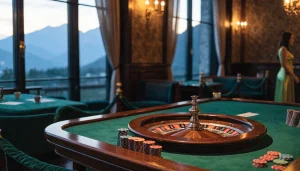
Free-play interfaces may use the same familiar visual language as other online pokies: a spin control, symbols and an outcome display. Those features describe how the game is presented, not a method for reading its future results. The animation can make a result feel like the endpoint of a visible sequence, yet the key selection is governed by the RNG. Reading movement or timing as a clue would confuse presentation with the mechanism that determines the result.
For someone exploring free pokies online in New Zealand, this is the most important principle to keep in view: free mode changes the context in which spins are tried, not the independence of successive outcomes. No observed run can establish what the next spin will show. Treating each result as uncertain is more consistent with the role of random number generation than treating past spins as clues.
Browser Play and Pokies Downloads
Free online pokies can be encountered through a browser or through a game file installed on a device. These are different ways of accessing software, not different kinds of spin. The label “no download” describes a browser-based route: the game is opened as a web page rather than installed as a separate application. A downloadable game, by contrast, requires a file to be saved and run or installed. Whether either option is available depends on the particular service and game; it cannot be assumed from the words “free pokies” alone.
Browser Play
Accessed via a web page in a browser without needing to install separate game files.
Download Play
Requires a file to be saved, opened, or installed on a device for local use.
In browser play, the game is delivered through the site while it is open. This avoids installing a separate game file, but it does not mean that no software is involved: the browser still displays and runs the game. The distinction is practical rather than mechanical. A spin in a browser-based game is still a spin generated by the game’s underlying system. Online pokies use random number generators, and earlier outcomes do not determine the next one. Changing from an installed file to a browser does not make a sequence of results predictable.
A download involves a separate step before play. The file may need to be saved, opened, or installed, depending on its format. Downloading a game is not the same as downloading a casino platform, and neither term establishes what a particular service provides. Some pages may describe access as browser-based, while others may refer to an application or a downloadable game. Those descriptions should be checked against the actual page rather than treated as interchangeable.
The word “free” also needs to be read in context. It may describe a free-play mode within a game, but it does not by itself say whether that mode is available in a browser, whether a file can be downloaded, or whether account registration is required. Likewise, “no registration” is a separate claim from “no download.” A page can offer browser access and still require an account, or describe a free mode without specifying how it is opened. The wording alone cannot establish the conditions of access.

For this reason, the useful distinction is between the method of access and the terms attached to it. Browser play means opening the game without installing a separate game file. Download play means obtaining a file for local use. Registration is a separate condition, and free play is a separate mode. One does not prove the others. A page that combines these labels may still leave important details unclear, such as whether the game itself is available without installation or whether the free mode appears only after entering a platform.
A downloadable file also calls for attention to its origin and purpose. A game file should not be assumed to be an official, complete, or safe version merely because it is described as free. The description needs to make clear what is being downloaded and how it relates to the game. Browser access avoids the step of installing a separate file, but it does not establish that a particular site is trustworthy or that its games are offered without conditions.
No general conclusion about New Zealand services follows from the access labels alone. Availability can vary by game and platform, and the terms may distinguish browser play, installation, and account access. The safest reading is narrow: “no download” concerns installation, not registration or the game’s rules; “free download” concerns the cost of obtaining a file, not necessarily every condition of play. These distinctions help describe how a game is opened without implying that a particular option is available everywhere.
What Free Play Can—and Cannot—Show
Free play pokies can show how a game presents its symbols, features and sequence of play, but a short run of spins cannot establish how it will perform over time. A cluster of wins, a long losing stretch or a single large result is an observation of that session—not a reliable forecast of later results. Playing pokies for free can therefore be useful for familiarisation or entertainment, while offering limited evidence about likely returns.
The distinction matters because a game’s return to player, or RTP, describes a long-run statistical average. It is the proportion of total stakes that a game is designed to return across a very large number of spins. The figure is theoretical, calculated from millions of simulated spins; it does not promise that a particular session will return the same proportion of its stakes.
A free-play session is far shorter than the scale on which RTP is defined. Its results may sit well above or below the theoretical return without contradicting it. A favourable run does not establish that the game is generous, and an unfavourable one does not show that its stated RTP is false. Neither observation provides enough information to infer what a later session will produce.
This limits what can be learned from free pokies games to play. They can provide a view of a game’s layout and how its features appear during play. They cannot, on their own, confirm a long-term return rate from the outcomes seen in a brief trial. Nor can a player treat the sequence of results as a dependable pattern to follow: the session records what happened, not what must happen next.
The same caution applies when play is free for fun. Enjoyment, pace and visual presentation are immediate features of the experience; statistical performance is a different question. A game may feel active because wins or feature events appear during a short session, but that impression is not a measurement of its long-run return. Conversely, a quiet session does not determine how often such events occur across a much larger sample.

RTP also needs to be read as a property of the game’s design rather than a personal outcome target. It describes the aggregate relationship between stakes and returns over a very large volume of play. It does not specify when returns occur, how they are distributed within a session, or what any individual player will receive. The theoretical figure and the result of a limited run answer different questions.
Accordingly, free play is best treated as a way to observe the game, not as a test that proves future performance. The number of wins in a short trial, the size of a particular result and the apparent rhythm of play should not be converted into a prediction. Even repeated free sessions do not change the meaning of RTP: the figure remains a long-run average, while each observed session remains only one set of outcomes.
People looking to play free pokies may also encounter different versions of a game, but a free session alone should not be taken as evidence that its observed return represents every version. The relevant point is methodological: an experience can be informative about what appeared during that run, while still being insufficient to establish a game’s long-term statistical behaviour.
Free play can therefore answer narrow questions about the immediate experience of a game. It cannot demonstrate that a later session will reproduce the same outcomes, or that a brief sample has verified its theoretical RTP. The distinction between observation and inference is essential when interpreting any result from a limited number of spins.
The 2026 Online Casino Rules in New Zealand
New Zealand’s rules distinguish between operating an online casino from within the country and accessing a casino website based overseas. The Gambling Act 2003 prohibits online casinos from being based in New Zealand. That restriction concerns the operator’s location; it does not make it a criminal offence for an individual in New Zealand to play at an offshore site.
The legal framework changed in 2026. The Online Casino Gambling Act 2026 took effect on 1 May, establishing New Zealand’s first domestic licensing regime for online casino gambling. The change does not mean that a complete licensing system was immediately available on that date. Instead, the Act sets out a transition before the full regime is expected to operate.
During this transition, online casinos that were already serving New Zealand customers before 1 May 2026 may continue until 1 December 2026, subject to the Act’s transitional provisions. The full licensed system is not expected to be fully operational until 2027. Accordingly, the phrase “free pokies in New Zealand 2026” covers a period in which the regulatory arrangements are changing, rather than a year in which the completed licensing regime is necessarily in force.
The distinction matters because the legal position of an operator and that of a player are not the same. The Act creates a route for domestic licensing, while the Gambling Act 2003 continues to rule out operating an online casino from within New Zealand. Playing at an offshore platform is not, by itself, a criminal offence for a New Zealand resident. However, during the period before the new regime is fully operational, offshore websites have not been supervised by a New Zealand regulator, and customers wagering with them have lacked domestic government recourse in a dispute.
The Department of Internal Affairs is identified as the regulator under the licensing framework in a specialist review of the proposed system. That role belongs to the new framework; it should not be read as evidence that offshore casinos were already under local oversight before the Act took effect. The Act’s transition also matters when interpreting claims that a casino is “licensed in New Zealand”: the existence of a licensing law does not, on its own, establish that the full licensing system is operating or that a particular operator holds a licence under it.

A specialist review of the framework also describes an initial provision for as many as 15 licences. This figure refers to the framework’s stated capacity, not to a confirmed count of licences already issued. The same distinction applies to requirements associated with licensed operation. The framework is described as imposing obligations concerning harm minimisation, advertising, age verification and tax contributions, but those obligations should not be treated as proof that an offshore site is locally licensed.
For free casino pokies, the immediate legal distinction is therefore between the game format and the service’s regulatory status. Free play does not turn an offshore operator into a New Zealand-licensed business, nor does the mere availability of free games establish local supervision. The transition dates provide the relevant context: eligible operators already serving the market may continue through the specified transition, while the complete licensing regime is expected later. Claims about an operator’s status need to be understood against that timetable, rather than inferred from the presence of free games or a sign-up promotion.
Playing Free Pokies on Mobile Devices
Free online pokies can be considered on mobile devices without treating the phone or tablet as part of the game’s outcome logic. The display may be smaller, but the central principle remains: each spin is determined by a random number generator. A result on a mobile screen is not made more or less likely by the device used to view it.
That distinction matters because a sequence of spins can appear to develop a pattern. A run of losses does not make a win due, and a win does not make another win more likely on the next spin. Previous results do not influence the following spin. This applies whether the game is being played free or for money, and whether it is viewed on a mobile device or another screen.
Free play can make it easier to observe how a particular game presents its rounds and results, but a mobile session still represents only a limited sample. The outcomes displayed during that session cannot establish what the game will produce later. Nor does a sequence on one device provide evidence about how the same game would behave on another. The random process, rather than the screen, determines each result.

RTP is also relevant to mobile play, but it should not be read as a forecast for a short session. It describes a theoretical return across a very large number of spins. It is a long-run statistical average, not a promise that a particular session will return a corresponding share of its stakes. A brief free-play session may therefore look very different from the percentage associated with a game’s RTP, without contradicting that measure.
The mobile format can make outcomes feel immediate because spins and results appear together on a personal screen. That presentation does not change the statistical meaning of a result. A visible sequence is still a sample of random outcomes, not a reliable signal of what the next spin will bring. The same caution applies when a session is repeated: separate runs do not combine into a dependable prediction.
For New Zealand players interested in free pokies on mobile, the useful distinction is between the device used to view a game and the mathematics governing its spins. Mobile play does not alter the independence of successive outcomes or turn theoretical RTP into a session-level guarantee. Free play can show the game’s own sequence of results, but those results remain specific to that session.
Pokie Features, Volatility and Bonus Buys
Pokie features can change how wins are distributed and how a game’s bonus round is accessed. Volatility describes the pattern of payouts: low-volatility pokies tend to produce smaller wins more often, while high-volatility games pay less frequently but may produce larger wins. It does not indicate when a win will occur, nor does it make a particular outcome predictable.
That distinction matters when comparing free pokies or free-play versions of games. A run of frequent small payouts may fit a low-volatility pattern, while a high-volatility game can produce a quiet session followed by a larger result—or no large result at all. The label describes a general payout profile, not a schedule. It cannot establish what will happen in a particular session.
Bonus Buy Features
A bonus-buy feature allows direct entry into a bonus round by paying a set multiple of the stake. This is a distinct game cost and does not guarantee a particular result within the round.
A bonus round is an in-game feature. It is separate from a sign-up bonus or other promotional offer from a casino. Games advertised as having a bonus may differ in how that feature is triggered: some require particular symbols or conditions during ordinary play, while a bonus-buy feature allows direct entry by paying a set multiple of the stake. The purchase bypasses the usual trigger; it does not guarantee a particular result within the round.
The cost is therefore central to understanding a bonus buy. Specialist game reviews report prices ranging from 50 to 100 times the stake, depending on the title. Because the charge is tied to the selected stake, the same multiplier can represent different amounts. It is a distinct game cost, not a free bonus, even where the round itself is described as a bonus feature.
A free version may make it possible to observe how a game presents its features, but it does not make a paid bonus buy costless in real-money play. The feature should be understood as an optional, high-cost route into a round rather than as an extra payout. Its presence also does not establish that the round will be more rewarding than ordinary play.
When comparing online pokies, volatility and bonus-buy availability answer different questions. Volatility concerns the frequency and relative size of wins across play; a bonus buy concerns whether direct entry into a round can be purchased and at what multiplier. Neither feature, on its own, determines the outcome of a spin or bonus round. Free pokies with bonus features can therefore differ substantially in structure, even when both offer an in-game route to a bonus round.

No-Deposit Offers and Their Conditions
A no-deposit offer is a promotion presented without requiring an initial payment, but the label alone does not establish that it is available, withdrawable or equivalent to cash. A stated cash value may describe the amount credited for play rather than money that can be taken out immediately. The terms determine what the offer permits, so the headline value is not enough to assess its practical worth.
Terms can set conditions on how promotional funds are used and whether any resulting balance can be withdrawn. They may also specify which games qualify and what steps are required to claim or use the offer. These details vary, and no particular no-deposit bonus can be assumed to be current or open to every player in New Zealand. A claim of free pokies with no deposit should therefore be read as an offer description, not proof of unrestricted play or cash access.
Demo pokies are a separate form of free play: they allow a game to be tried without being a promotional credit attached to an account. Video pokies may appear in demo form, but that does not make them part of a no-deposit bonus. The distinction matters because a bonus has its own terms, while a demo is not presented as a cash-value promotion. Neither label, by itself, establishes that winnings can be withdrawn.
Bonus-buy features require particular attention in promotional terms. They allow a player to pay a fixed multiple of the stake to enter a bonus round directly. A specialist review reports that these purchases can be priced at 50 to 100 times the stake, depending on the game. The same type of review says bonus-buy play is generally excluded from wagering requirements attached to promotional funds. This is not a universal rule for every offer; the applicable terms need to be checked before promotional credit is used on such a feature.
Do
- Check the specific terms for any no-deposit offer.
- Verify if a bonus requires account registration.
Don't
- Assume a headline cash value is immediately withdrawable.
- Treat a promotional balance as freely available cash.
The central distinction is between a promotional balance and cash that is freely available. A bonus described as having a monetary value may still be restricted by game eligibility or other stated conditions. It should not be treated as playable cash until the terms establish what it can be used for and what applies to any resulting balance. Where those conditions are unclear, the headline amount alone cannot settle the question.
Free Pokies Versus Real-Money Play
Free-play mode and real-money gambling are different activities, even when they use the same online pokie. In a free game, spins do not involve a cash stake, so an on-screen result does not itself establish that money has been won. Real-money play involves wagering funds and may produce a cash balance, subject to the site’s terms. The wording “free pokies for real money” therefore combines two distinct ideas: a game can be tried without a cash wager, or played with money, but a free-play result is not a real-money payout.
For New Zealand players, the legal position also depends on whether the question concerns the operator or the individual. The Gambling Act 2003 bars online casinos from being based in New Zealand. That restriction does not make it a criminal offence for an individual New Zealander to play at an offshore online casino. The distinction matters: a prohibition on operating a domestic online casino should not be read as a criminal penalty for a player using an overseas platform.
This does not make free play and paid play equivalent in practical or legal terms. A free mode carries no cash wager, while real-money play exposes funds to the outcomes of gambling. Nor does the fact that an offshore site accepts New Zealand customers establish that it is supervised by a New Zealand regulator. The status of the operator and the legal position of the player are separate questions.

Age is relevant to both forms of online casino play. In New Zealand, participation in online casino gambling is restricted to adults aged 18 and over; a free-play setting does not provide a basis for treating an underage user as eligible. The absence of a cash stake changes the financial character of the activity, not the age threshold given for online casino play.
Recreational gambling winnings in New Zealand are generally not taxed. This general treatment does not turn a free-play balance into a taxable or withdrawable win: free spins do not create real-money winnings merely because the game displays a positive result. Where a real-money offshore game is involved, the fact that recreational winnings are generally untaxed concerns the player’s tax treatment; it does not certify the operator, guarantee a payout, or provide domestic recourse in a dispute.
The central distinction is therefore between a simulated result and a wager involving money, alongside the separate distinction between rules for operators and liability for players. Free-play labels do not erase the age requirement, while playing at an offshore casino is not, by itself, a criminal offence for a New Zealander.
How Classic, Video and Progressive Pokies Differ
Free online pokies can be grouped by their basic structure and the features built around the reels. The categories are not interchangeable: a classic game is defined by a simpler reel format, while video pokies can add feature rounds. Progressive jackpots are distinguished by how contributions from play are pooled.
Classic pokies
Classic pokies use three reels and do not include bonus rounds. Their structure is therefore comparatively direct: the game centres on reel outcomes rather than a separate bonus phase. This can make the format easier to understand at a glance, but it does not establish that a classic game will produce a particular pattern of results.

The absence of bonus rounds is the key distinction, not a promise that the game has no other variations. The defining description is limited to its three-reel format and lack of bonus play.
Video pokies
Video pokies commonly use five reels and may include wilds, scatters and free-spins rounds. These features add possible elements to the base game: symbols can have special roles, and a qualifying outcome can lead into a free-spins feature. The presence of such features changes the game’s structure, but does not make a win or a bonus round certain on any particular spin.
For someone browsing free pokies games, the distinction is useful when comparing what a game asks of its attention. A classic format has no bonus round; a video format may include additional symbols and a feature round. Neither label, by itself, indicates which game is preferable.
Progressive jackpots
Progressive jackpot games are identified by a shared contribution mechanism. Spins across casinos running the same game contribute to a pooled jackpot, linking play across those locations rather than keeping the prize solely within one game session.
That shared pool distinguishes a progressive jackpot from a fixed game format such as classic or video. The terms describe different aspects: classic and video refer to reel and feature structure, while progressive describes how jackpot contributions accumulate. A game can therefore be understood by considering both its format and whether it has a progressive jackpot.
These distinctions provide a practical way to sort free games by their structure without treating labels as predictions of performance. A three-reel game without bonus rounds, a five-reel game with possible feature rounds, and a game connected to a pooled jackpot offer different designs; the categories alone do not establish how a session will turn out.

Free Play, Session Outcomes and Jackpot RTP
Free pokies for fun can produce a varied run of results, but the pattern depends partly on a game’s volatility. Low-volatility pokies tend to award smaller wins more often. High-volatility games pay less frequently, with the possibility of larger wins. Neither pattern determines what will happen in a particular session.
A game’s return to player, or RTP, describes its theoretical long-run return across a very large number of spins. It is a statistical average, not a promise that a session will return a particular share of the stakes. A short run of free spins may therefore look very different from the theoretical return, even when the game’s stated RTP is unchanged.
Progressive jackpot pokies add another feature to that calculation. Contributions from spins across casinos running the same game are pooled towards the jackpot. Part of each bet goes into that pool, so the base-game RTP is lower than it would be without the jackpot contribution. The jackpot may attract attention, but its presence does not make the base game’s ordinary outcomes more predictable.
This distinction matters when interpreting free pokies for entertainment. A session can illustrate the game’s available play and the kinds of outcomes that occur, but it cannot establish how often a jackpot will be won or what a future session will return. With a progressive game, the displayed jackpot and the base-game return describe different aspects of play: one reflects the accumulated prize, while the other concerns the game’s long-run statistical return.
For recreational play, session results are best understood as individual outcomes rather than evidence that a game is due to pay, or that a particular result is likely to follow. Neither volatility nor RTP removes uncertainty from a single session.
Casino Games in New Zealand: An Overview
Content created by the «casinoslotsnz.com» team