
Separate the pace from the odds
 Available in US
Speed roulette changes the pace of a round, while the wheel format determines its pockets and mathematical profile.
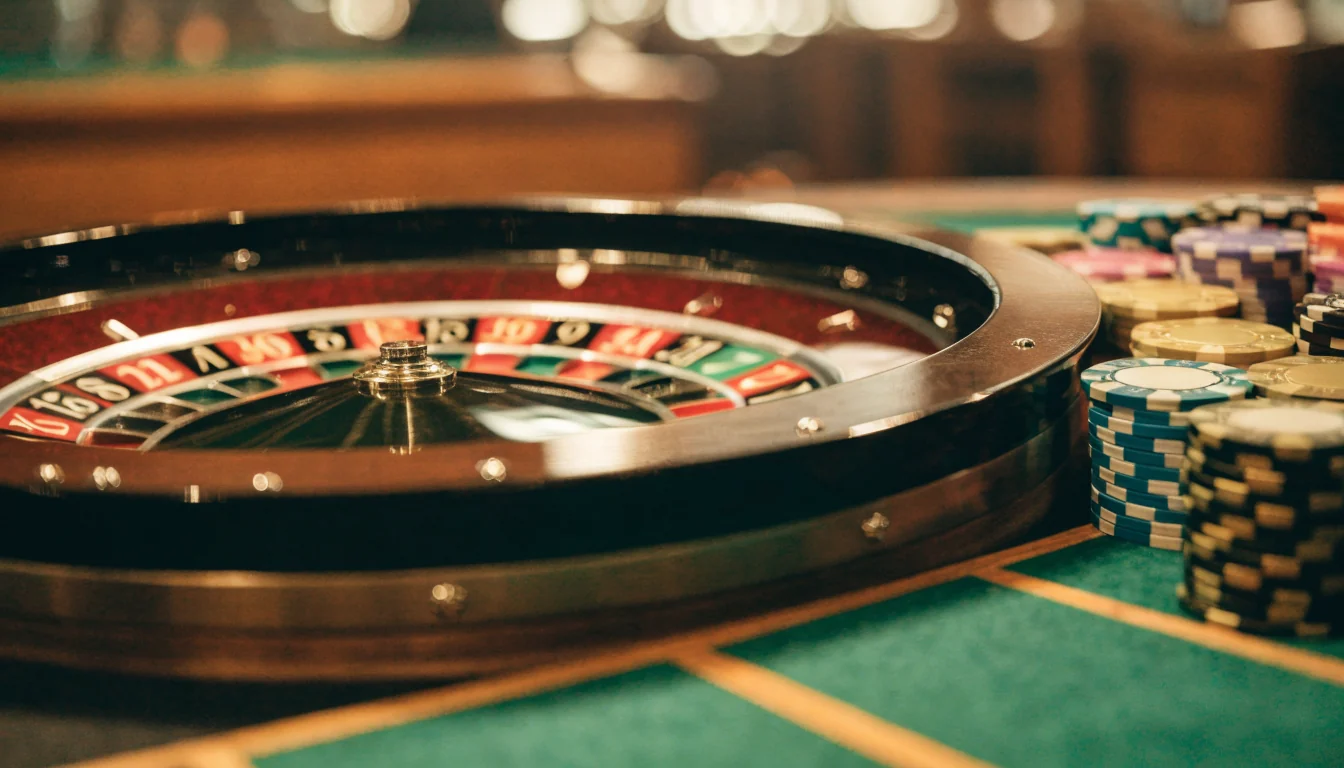
Roulette Formats Behind the Speed Label
“Speed roulette” describes a style of roulette presentation, but the label alone does not identify the wheel being used. The underlying format matters: European Roulette and American Roulette have different pocket layouts, so they are not interchangeable versions of the same game.
European Roulette has 37 pockets: numbered pockets from 1 to 36 and a single zero. American Roulette adds a double-zero pocket, giving it 38 pockets in total. That extra pocket is a structural difference, not a change to the table’s appearance alone. It changes the set of possible outcomes and the game’s mathematical profile.
The difference is reflected in the house edge. European Roulette has a 2.70% house edge, while American Roulette has a 5.26% house edge. These figures describe the expected mathematical disadvantage built into the game over repeated play; they do not predict what will happen in an individual session. A fast presentation does not alter the wheel’s pocket count or, by itself, change the relevant house edge.
This distinction is useful when a game is described mainly by its pace or branding. The name may draw attention to how quickly rounds are presented, but the format should still be identified as European or American Roulette. If the wheel has one zero, it is the European layout; if it has both a single zero and a double zero, it is the American layout.
The wheel format therefore provides a more reliable basis for comparison than the word “speed.” Two games carrying a similar speed label may use different roulette layouts, and their mathematical characteristics can differ accordingly. Conversely, a faster presentation does not necessarily mean that a different roulette format is being used.
The relevant distinction at this stage is limited to the wheel: European Roulette has a single zero, whereas American Roulette has an additional double zero. Identifying that layout clarifies what kind of roulette sits behind the speed label, without treating speed itself as a separate wheel type.
The Speed Roulette Wheel and Its Odds
A speed roulette wheel does not have a separate mathematical advantage simply because the game is presented at a faster pace. The relevant figures come from the wheel layout and the rules attached to particular bets. Where those are unchanged, faster presentation does not alter the house edge.

European Roulette has a single zero among 37 pockets, producing a house edge of 2.70%. American Roulette adds a double zero, bringing the total to 38 pockets and raising the edge to 5.26%. That difference matters because the extra pocket increases the casino’s advantage across standard bets. A game labelled “speed” should therefore be assessed by its stated wheel and rules, rather than by its name alone.
French Roulette uses the same single-zero layout as European Roulette, so the underlying pocket count is not lower. Its potential advantage comes from rules that apply to eligible even-money outside bets when zero appears. Under La Partage, half the stake is returned and the other half is lost. Under En Prison, the bet is carried forward: a win on the next spin returns the original stake without extra winnings, while a loss forfeits it. With either rule in force, the house edge for French Roulette falls to 1.35% on the relevant basis.
That reduction is not a general discount on every wager at the table. It concerns even-money outside bets and depends on the zero rules actually applying. Other bet types do not receive the same treatment, so the lower figure should not be read as the edge for every possible choice.
The comparison is useful when a speed game offers more than one roulette format. A faster round does not compensate for an additional zero, and the French figure is relevant only where the stated rule conditions are met. The decisive details are the number of pockets and how zero is handled for the bet in question. The title or pace of a game, by itself, says little about its mathematical cost.
How to Play Speed Roulette
A roulette wager can be understood by where it is placed and what it covers. Table-layout bets are entered on the numbered betting area. Called bets, by contrast, refer to groups of numbers defined by their positions around the wheel. This distinction matters because a group that is adjacent on the wheel need not appear together on the table.
Betting Types
Table-layout bets are entered on the numbered betting area. Inside bets target a specific number or small group (straight-up, split, street, corner, line), while outside bets cover broader categories like colour, odd/even, or ranges.
Called bets are grouped according to wheel positions rather than table layout, meaning the numbers may be scattered across the betting area.
On the layout, an inside bet targets a number or a small group of numbers shown in the central numbered area. A straight-up bet selects one number; split, street, corner and line bets cover neighbouring numbers as arranged on the layout. Outside bets sit around its perimeter and cover broader categories, such as a colour, odd or even numbers, or a range. The layout makes the scope of each selection visible: the covered numbers are determined by the marked area on which the chips are placed.
Called bets are not defined by those table shapes. Their numbers are grouped according to wheel positions, so a called group follows the wheel’s sequence rather than a row or block on the betting layout. The numbers in such a group may therefore be scattered across the table. In practical terms, a player selecting a called bet is choosing a wheel-based grouping, while a player placing a conventional table bet is choosing by the marked layout.
The two methods describe different ways of specifying coverage, not different outcomes. A called bet still resolves against the number on which the ball lands, just as a layout bet does. Its label does not change the physical wheel or make the selected numbers more likely to appear. The relevant distinction is how the numbers are assembled into a wager.
For anyone learning how to play speed roulette, identifying the bet’s covered numbers is more useful than relying on its name alone. The table position shows the scope of a layout bet directly; a called bet requires understanding which wheel positions belong to that group. Before placing either type, the selected numbers and the wager’s stated coverage should be clear. This classification keeps the two systems of grouping separate without confusing a table arrangement with a wheel-based selection.

Live Speed Roulette: What the Format Changes
Live speed roulette combines a live-dealer presentation with a quicker-feeling style of play. The distinction is primarily about how a game is delivered and experienced, rather than a separate principle of roulette. A live table presents a dealer and wheel through a video stream, while an on-screen interface allows bets to be placed. The pace can make the experience feel more immediate than a non-live game, but the label alone does not establish a fixed speed or a particular set of rules.
“Speed” is not, by itself, a precise description of a game’s mechanics. It does not specify how long betting remains open, how quickly a dealer spins, or how much time is available between rounds. Those details depend on the individual game and its presentation. A title containing the word may therefore signal a style or product name without guaranteeing a particular tempo. The information displayed with the game is more useful for identifying its actual procedures than the broad label.
The live element
A live game adds a human dealer and a video-based table environment to the familiar digital interface. The dealer conducts the round on camera, while the software displays the betting area and records selections. This can make the sequence of events more visible: a betting phase is followed by the spin and the announcement or display of the result. The exact interface, timing and presentation may differ between games.
The live format does not make a round more predictable. In roulette, spins are independent: results from earlier rounds do not change the probability of outcomes on later ones. A sequence that appears to be forming in the video feed or on a results panel is still a record of what has already happened, not evidence of what must happen next. This remains true whether the wheel is shown on a live stream or the round is presented in another format.
The presence of a dealer also should not be confused with a guarantee about every aspect of the game. A stream can show the table and the conduct of a round, but the label “live” does not, on its own, establish how the game is operated, what rules apply, or how quickly a round proceeds. Those are separate details that need to be assessed from the particular game information.
Where named variants fit
Lightning Roulette, First Person Lightning Roulette and XXXtreme Lightning Roulette are named variants within the wider roulette category. Their titles indicate distinct branded game offerings, but a name alone is not enough to establish the exact live presentation, pace or rules. In particular, the word “Lightning” should not be treated as a complete description of how a round works. The available title may identify a game without explaining its procedures.
This distinction matters when comparing a standard live table with a named variant. Both may appear within a live casino interface, yet the branding does not prove that they share the same presentation or round structure. Nor does the existence of a variant imply that its outcomes are governed by a different general principle of independence. Each spin remains a new event; prior results do not determine future ones.
A title can also be encountered in a form that differs from what its name might suggest. For example, First Person Lightning Roulette is named as a variant, but the title alone does not establish whether a particular version uses a live dealer stream. It is therefore more accurate to describe such games as examples of the broader roulette category unless the individual game information confirms its delivery format.
What the “speed” label can establish
The term can help distinguish a product’s presentation from a conventional table offering, but it should not be read as a promise of a measured pace. A game may be marketed as fast or use “speed” in its title while leaving practical details to its own interface and rules. The label does not establish that rounds take a particular length of time, that the game has fewer pauses, or that a player can act at any moment.
In live casino speed roulette, the most defensible distinction is between the visual and procedural experience of a live table and the mathematical nature of roulette outcomes. The first concerns how a game is shown and conducted. The second concerns the chance structure of each spin. A more rapid presentation may change the rhythm of play, but it does not make past results predictive or alter the independence of future spins.
For that reason, “live speed roulette” is best understood as a description of format and presentation, not as a claim about improved chances. Named games such as Lightning Roulette and its related variants can be considered within that broader category, while their specific features should be determined from their individual descriptions. The title, live stream and apparent pace are not substitutes for the rules of the game.
Speed Roulette Online in New Zealand
When looking for speed roulette in New Zealand in 2026, it helps to check the available operator details before deciding where to play. This list offers a concise reference point, with the information provided for each operator.
-
7Bit Casino
- License
- Tobique Gaming Commission, licence no. 0000091
7Bit Casino is listed with a Tobique Gaming Commission licence, number 0000091. That licence detail is the operator-specific information provided here.
-
Ricky Casino
- License
- Tobique Gaming Commission, licence no. 0000002
Ricky Casino is listed with a Tobique Gaming Commission licence, number 0000002. The licence is the only operator-specific detail supplied.
-
N1 Casino
- License
- Malta Gaming Authority, licence no. MGA/B2C/394/2017
N1 Casino is listed with a Malta Gaming Authority licence, number MGA/B2C/394/2017. No other operator-specific attributes are provided.
-
BitStarz
- License
- Curaçao Gaming Authority, licence no. OGL/2024/165/0185
BitStarz is listed with a Curaçao Gaming Authority licence, number OGL/2024/165/0185. The supplied information is limited to this licence detail.
-
Play Grand
- License
- Malta Gaming Authority, licence no. MGA/B2C/370/2017
Play Grand is listed with a Malta Gaming Authority licence, number MGA/B2C/370/2017. No further operator-specific details are available here.
-
Wintino
- Payout speed
- 1-3 business days
Wintino has a stated payout speed of 1–3 business days. No licence information is provided.
-
Zotabet
- License
- 07017519840
- Payout speed
- 1-3 business days
Zotabet is listed with licence number 07017519840 and a stated payout speed of 1–3 business days. No further licence details are supplied.
-
Lamabet
- Payout speed
- 1-3 business days
Lamabet has a stated payout speed of 1–3 business days. No licence information is provided.
-
Neospin
- License
- Tobique Gaming Commission, licence no. 0000064
Neospin is listed with a Tobique Gaming Commission licence, number 0000064. The licence is the only operator-specific detail supplied.
Speed roulette online sits within a changing regulatory environment in New Zealand. The Online Casino Gambling Act 2026 created the country’s first domestic licensing framework for online casino gambling and came into force on 1 May 2026. The transition is not the same as a fully operational licensing system: the complete regime is not expected to be in place until 2027.
The Act permits providers that were already serving people in New Zealand before it took effect to continue during a defined transition, which runs from 1 May to 1 December 2026. This is a time-limited arrangement, not evidence that every online casino has a New Zealand licence. Providers that have not applied for a licence must stop conducting online casino gambling in New Zealand by 1 December 2026. Unlicensed operation is expected to become an offence around mid-2027, and operators without a licence may face enforcement action and fines of up to NZ$5 million.
That change follows a different legal position. The Gambling Act 2003 did not permit online casinos to be based in New Zealand, and domestic online casinos were prohibited. Before the 2026 Act, offshore online casino gambling was neither licensed nor supervised by a New Zealand regulator. Customers who wagered through offshore websites during that period had no domestic government recourse. The transition now allows certain existing providers to continue temporarily, but it does not erase the distinction between transitional operation and a licence issued under the new framework.

The Department of Internal Affairs is New Zealand’s primary gambling regulator and oversees the online casino licensing framework. The Gambling Commission has a separate decision-making role: it hears and determines casino licence applications, issues online casino licences, and approves changes to licence conditions. These responsibilities should not be conflated. The framework assigns oversight to the Department and licensing decisions to the Commission.
The transition also imposes limits on promotion. Online casino gambling services must not be advertised to people in New Zealand during this period. The presence of a website, a game title, or a statement that a provider is operating during the transition does not by itself establish that the provider holds a domestic licence.
Licensed operators will have to use stricter age and identity verification systems. These requirements are part of the developing regulatory framework, rather than a feature that can be inferred from the speed of a roulette game or from its presentation online. A fast-paced format does not change the legal status of a provider, the licensing process, or the checks required of licensed operators.
Bonus terms are another separate consideration. Operators may set eligibility conditions, wagering requirements, expiry rules, game-contribution limits, and restrictions on withdrawals. Those conditions affect whether an offer can be used and whether related winnings can be withdrawn; a bonus headline alone does not describe its full terms. Winnings from free spins must be wagered 50 times within 7 days. A withdrawal request voids all active or pending bonuses. These requirements should be read as restrictions, not as evidence that a bonus improves the underlying terms of roulette.
The legal framework is still moving from transition to full implementation. A provider’s continued operation before the transition ends should not be presented as proof of a completed licence, while a future application should not be treated as an issued licence. For speed roulette in New Zealand in 2026, the relevant distinctions are the date on which a provider began operating, whether it falls within the transitional provisions, and whether it has applied for a licence before the transition closes.
Using a Speed Roulette Calculator Without Treating It as a Prediction
A roulette calculator can clarify what a stated payout percentage or house-edge figure represents, provided its assumptions match the game being assessed. It cannot identify the result of a future spin. The speed of an automated or quickly run game does not turn historical results into predictive information.
A payout percentage describes the theoretical share of stakes returned over repeated play under specified rules. It is not a forecast that the same share will come back during a short session, nor a promise about an individual wager. A house-edge figure expresses the corresponding mathematical disadvantage to the player over the long run. Both measures depend on the wheel and rules used in the calculation; a result detached from those details can be misleading.

The distinction matters when figures are presented for particular roulette formats. A specialist review reports a payout percentage of 94.70% for American roulette and 97.30% for European roulette. Those values should be treated as figures reported by that review, not as universal properties of every game carrying those labels. The displayed rules and calculation method remain relevant. A calculator can show what follows from the assumptions entered, but it cannot verify that those assumptions describe a particular table.
A useful calculation therefore has a limited role: it can make the relationship between a stated return and a stated edge easier to interpret. It can also expose mismatches, such as entering one wheel format while assessing another. If a game’s rules are unclear, a precise-looking output does not resolve that uncertainty. The result is only as informative as its inputs.
Most importantly, previous outcomes do not alter the probability of outcomes on later roulette spins. Each spin is independent. A run of one colour, a sequence of particular numbers, or an apparent pattern in recent results does not give a roulette speed calculator a basis for forecasting the next result. A tool that turns a history of spins into a prediction would be presenting pattern recognition as probability, not establishing that the next spin is more likely to follow a particular course.
This applies equally to speed roulette and to automated roulette. Faster presentation may mean that results appear more frequently, but it does not make the wheel’s prior outcomes relevant to the next independent spin. A calculator may describe a game’s theoretical characteristics; it cannot convert speed or recorded results into advance knowledge.
The practical interpretation is narrow. A calculation can support comparison when the game rules and the source of the figures are clear. It cannot promise a return for a particular session, explain what the next spin will produce, or make an uncertain result certain. Roulette remains random, and every real-money bet can lose. No amount that cannot be afforded as a loss should be put at risk.
Strategy and the Limits of Roulette Systems
A roulette system can organise stake choices, but it cannot change how the wheel works. In speed roulette, as in other roulette formats, the sequence of bets does not influence the result of a later spin. Each spin is independent: previous outcomes do not make a number, colour or other result more or less likely on the next one.
That distinction matters when a pattern appears persuasive. A run of red results may prompt a bet on black, while a run of losses may seem to call for a larger stake. Neither response alters the probability of the next outcome. A betting plan can specify what to do after a win or loss, but it cannot turn past results into evidence that a future result is due.
The house edge remains relevant regardless of the system used. Single-zero European Roulette normally has a house edge of 2.70%. This is a feature of the game’s rules, not a charge that can be avoided by choosing a particular sequence of stakes. A system may change the size and timing of possible wins and losses, but it does not remove that underlying disadvantage.
Progression systems illustrate the difference between managing stakes and changing odds. The Martingale, for instance, involves increasing a stake after a loss in an attempt to recover earlier losses with a subsequent win. A win may recover some losses in a particular sequence, but it does not become more likely because the stake has grown. Repeated losses can require increasingly large stakes, and a system cannot guarantee that a recovery win will arrive before funds or table limits prevent further betting. It should not be treated as a winning method.
Other approaches, such as keeping stakes fixed or changing them after wins, also leave spin probabilities unchanged. Their practical effect is on exposure: how much is committed, how quickly a balance may change, and when betting stops. A record of results can help describe what has happened, but it cannot establish a predictive pattern in independent spins.
The label “best strategy” therefore needs qualification. A method may be considered more manageable for a particular budget or preference, but that is not the same as improving the mathematical chance of a favourable outcome. No staking pattern makes a losing bet safe, and no sequence can guarantee profit. Claims that a system “beats” roulette require evidence beyond a winning example or a selected run of results.
Speed can also affect how quickly decisions are presented, but it does not create a strategic advantage. A plan made in advance may reduce impulsive changes to stakes; it should not be confused with a way to control the wheel. The most defensible approach is to set a spending limit, stop when it is reached, and not risk more than can be afforded to lose. Every real-money roulette bet can lose, including one placed as part of a carefully followed system.
Do
- Set a personal spending limit
- Stop playing when the limit is reached
- Assess rules and wheel type before betting
Don't
- Use systems to try and beat the house edge
- Risk money that cannot be afforded to lose
- Rely on past patterns to predict future spins
Free Play, Green Zeroes and Triple-Zero Rules
Free play and wheel rules describe different things. A free-play balance or free spins are promotional terms; a green zero is part of the wheel’s layout. Neither changes the other. A promotion does not alter the rules applied when a ball lands on zero, and a green pocket does not determine whether promotional funds can be withdrawn.
In New Zealand, advertised bonuses may carry eligibility rules, wagering requirements, expiry conditions, game-contribution terms and withdrawal restrictions. The stated conditions require bonus money to be wagered 50X within 30 days. Winnings from free spins must be wagered 50 times within 7 days. A withdrawal request voids all active or pending bonuses. These conditions affect the availability of promotional value; they are not evidence that a roulette game has more favourable odds.
A free-play version can allow the mechanics of roulette to be explored without staking cash, but its promotional status should not be confused with a change to the game’s underlying rules. In particular, free spins or bonus funds do not make a zero less consequential. The relevant terms and the wheel rules remain separate matters.
What zero rules can change
La Partage and En Prison apply only to even-money outside bets, and only if zero lands. They do not apply to every bet on the table. Under La Partage, half of the stake on an eligible bet is returned when zero appears; the other half is lost. The rule therefore reduces the loss on that event, rather than turning it into a win.
En Prison treats the eligible bet differently. After zero, the stake is held for the following spin. If that spin wins, the original stake is returned without additional winnings. If it loses, the stake is collected. The distinction matters: En Prison does not award a profit merely because the original bet is eventually resolved as a win.
These rules concern the treatment of specific bets after zero, not the colour of the pocket. A green zero marks the zero position; the colour itself does not establish whether La Partage or En Prison is available. Those rules must be part of the particular game’s stated conditions. A speed label also does not, by itself, establish that either rule applies.
Interpreting triple-zero wording
A triple-zero label indicates a roulette format that includes additional zero positions, but the label alone does not specify how a particular bet is settled. A green marking can help identify a zero pocket on the displayed wheel; it cannot substitute for the game rules. Where the rules do not state that La Partage or En Prison applies, those treatments should not be assumed.
For a game described as free, the key distinction is whether it is a demonstration mode or a promotion with conditions attached. Promotional terms govern eligibility, wagering and withdrawals; wheel rules govern how bets are settled. Keeping those categories separate avoids treating free access, green zeroes or a triple-zero label as proof of improved value.
What a Speed Roulette Demo Can and Cannot Show
A speed roulette demo can provide a practical view of how a round is presented and how the betting interface is organised. It may help clarify where selections are made, how a stake is assigned to a choice, and how the sequence moves from betting to a result. This is evidence about the demonstration’s interface and flow, not about the likelihood of a particular result.

A demo can also help distinguish broad bet categories as they appear on screen. The layout may show selections associated with individual numbers or with larger groups of outcomes. Seeing those categories in use can make the interface easier to interpret, but it does not establish that one category is more likely to produce a return than another. Nor does a demonstration show that a particular selection will succeed in later play.
The central limitation is that displayed results in a demo do not predict future spins. Roulette spins are independent: previous outcomes do not change the probability of outcomes on subsequent spins. A sequence shown during practice therefore offers no reliable signal about what comes next, whether it contains repeated colours, numbers or other apparent patterns.
A demo is also not evidence of a player’s likely financial outcome in real-money play. Demonstration results do not establish that a person would win, lose or experience the same sequence when wagering. The interface can illustrate how choices are entered and how a round progresses; it cannot turn those observations into a forecast.
This distinction matters when a practice environment feels familiar. Familiarity with buttons, labels and the order of actions may reduce uncertainty about using the interface, but it does not reduce the randomness of roulette outcomes. A smooth demonstration can communicate presentation clearly while saying nothing conclusive about future results.
Any move from demonstration to real-money play changes the financial stakes, not the independence of the spins. Every real-money bet can lose, and no demo result removes that risk. Roulette should not involve risking more than can be afforded to lose. A demo is best understood as a way to inspect the game’s operation, not as proof of an advantage, a forecast or a basis for expecting a return.
Reading Speed Roulette Tips Against the Odds
Advice about speed roulette is most useful when it clarifies risk, rather than implying that a particular choice can secure a win. A tip may help explain how a game works or prompt a pause before placing a bet. It cannot change the random outcome of a spin. Each spin is independent, so results from earlier rounds do not alter the probability of outcomes on later ones. A run of one colour, for instance, is not evidence that another colour is now due.
The faster presentation of a game can make it harder to reflect between bets. That is a reason to treat tips about pacing as prompts for deliberate limits, not as ways to improve the odds. Any real-money bet can lose, and no tip can remove that possibility. Gambling should not involve risking money that cannot be afforded to lose. If a recommendation encourages larger stakes, continued play after losses or confidence in a certain result, its practical effect may be to increase exposure rather than reduce risk.
Advice about wheel and rule differences needs equally careful reading. French Roulette offers the best odds for even-money bets because La Partage and En Prison can change what happens to an eligible bet when zero lands. That advantage is conditional on the rules and the type of bet; it does not make a winning result certain. A tip that describes French Roulette as risk-free, or presents its rules as applying to every bet, goes beyond what those rules establish.
The wording of a tip also matters. Claims that a pattern guarantees a result, that a previous sequence predicts the next spin, or that losses can reliably be recovered should not be treated as evidence. A recommendation can be assessed by asking whether it describes a rule, sets a personal boundary or makes a promise about outcomes. The first two may inform a decision; the last cannot be substantiated by roulette’s independent spins. Responsible advice therefore makes uncertainty explicit and leaves the possibility of losing visible, rather than disguising it with confident language.
Casino Games in New Zealand: An Overview
Content created by the «casinoslotsnz.com» team